How to Travel by Plane With an Electric Wheelchair (2026 Guide)
A clear 2026 guide to flying with an electric wheelchair: TSA screening, the FAA 300Wh battery rule, how to fold and check your chair, and what your airline must do.
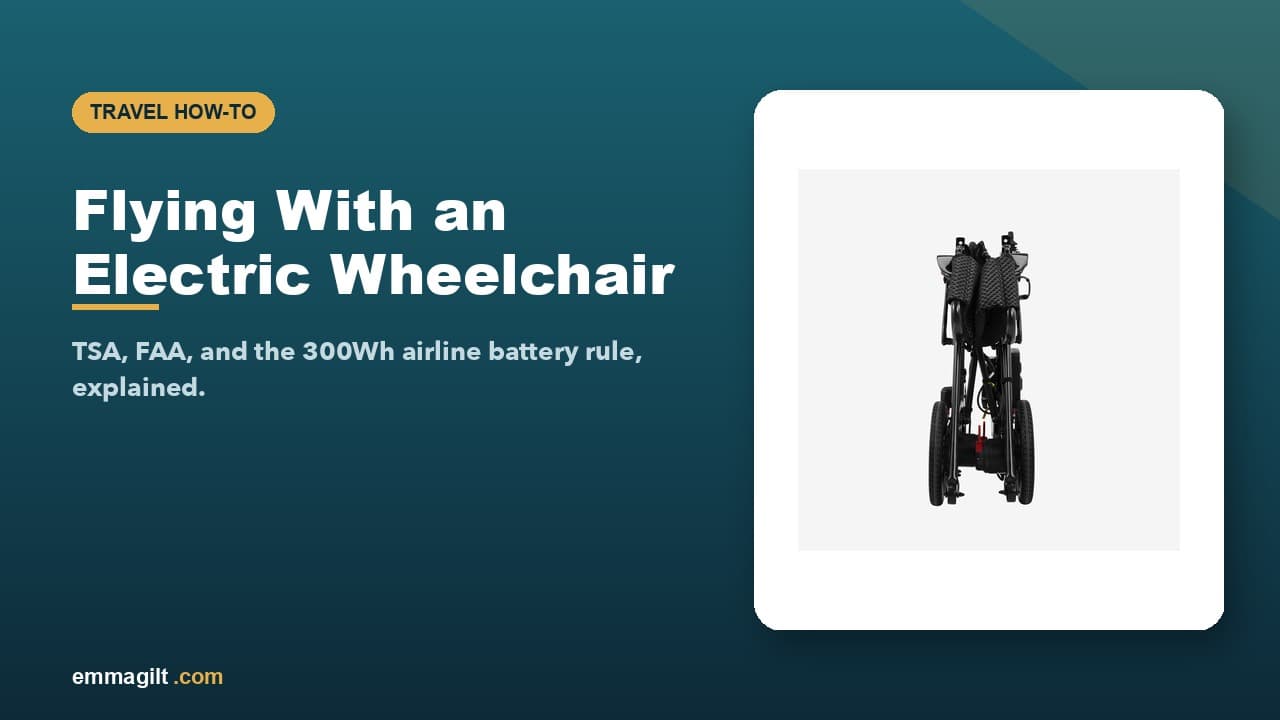
The Battery Rule Everyone Gets Wrong
Learning how to travel by plane with an electric wheelchair is the single thing that stops most people from booking the trip. The fear is understandable: stories of damaged chairs, batteries confiscated at the gate, and confused agents applying the wrong rule are everywhere. But almost all of that comes down to two fixable problems - the wrong chair, or the wrong paperwork. Get both right, and flying with a folding power chair is routine.
This guide walks through the whole process: the battery rule that actually applies (it is not the one most people quote), how to prepare your chair, what happens at security and the gate, and the rights your airline is legally required to honor. It uses Kerdom’s airline-legal folding chairs as a worked example, because their batteries are built specifically to clear the limit that matters.
The Battery Rule Everyone Gets Wrong
Here is the confusion that ruins trips. You have read that lithium batteries are capped at 100 watt-hours (Wh) freely, and 160Wh with airline approval. Your chair’s battery is 180Wh or 240Wh. Panic.
Don’t. That 100/160Wh limit applies to loose consumer batteries - laptops, power banks, camera packs. It does not apply to the battery that powers a mobility device.
Under the US Air Carrier Access Act (ACAA) and the matching FAA/PHMSA rules, a battery that drives a wheelchair is classed as a mobility-aid battery, and airlines are required to accept it - including a removed battery carried into the cabin - up to 300Wh per battery (or two batteries up to 160Wh each). A 240Wh power bank would be refused; a 240Wh wheelchair battery flies. Same chemistry, different category, because one is medical mobility equipment and the other is a gadget.
This is exactly why airline-ready chairs are engineered to sit under 300Wh. Kerdom’s folding models use packs from 180Wh up to 250Wh - comfortably inside the mobility limit - and the batteries pop out so they can travel in the cabin with you while the frame is checked at the gate. If you remember one fact from this guide, make it this one: your chair is judged against the 300Wh mobility-aid limit, not the 160Wh carry-on limit. Print the battery’s spec and carry it, so a gate agent checks the right number.
Before You Book: Choose a Travel-Ready Chair
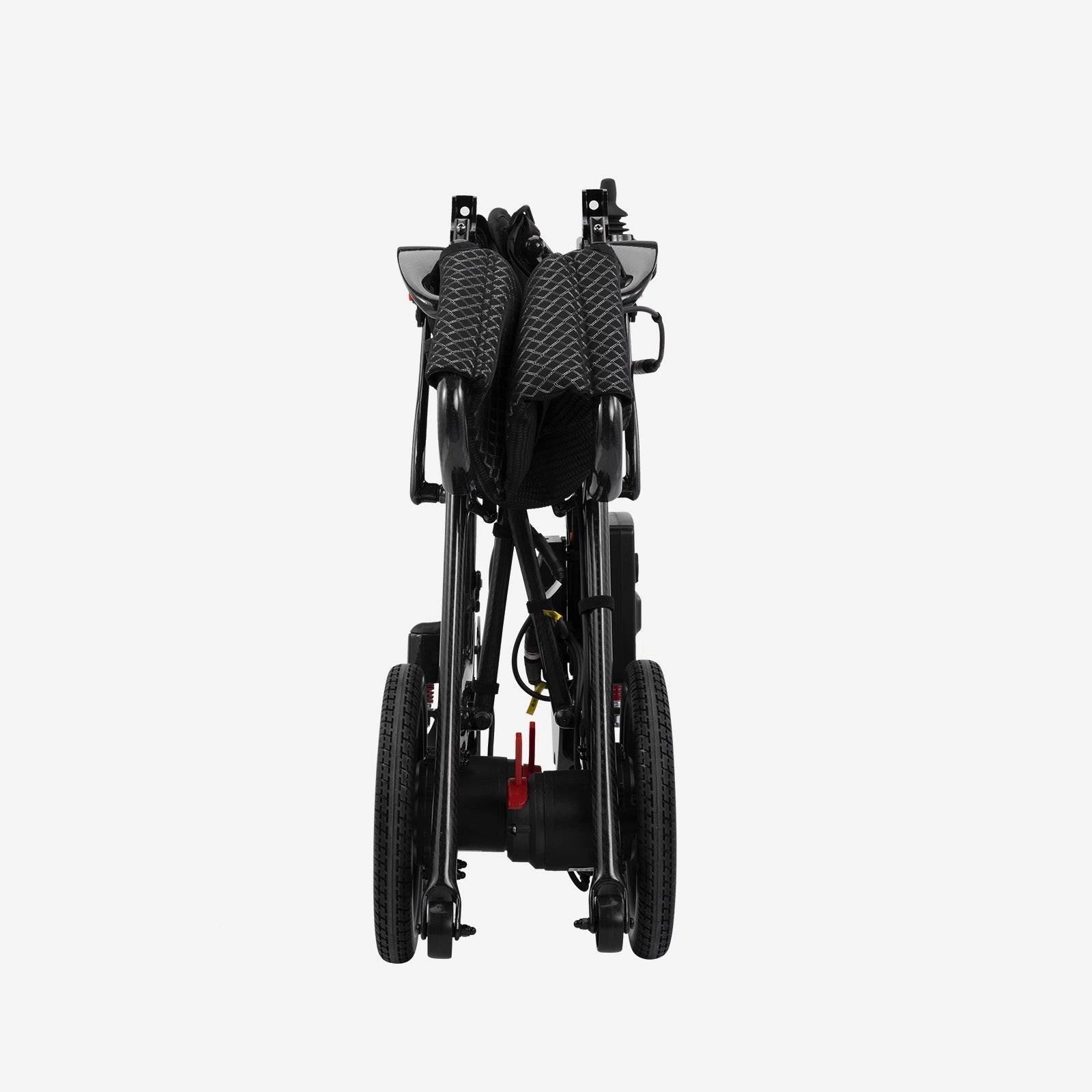
The easiest flights start months earlier, when you buy the chair. A power chair is “travel-ready” when it ticks four boxes:
- Folds compactly. A frame that collapses to roughly car-seat width also fits gate-check and cargo handling without drama. The lighter and smaller it folds, the less it gets manhandled.
- Removable battery under 300Wh. Non-negotiable for cabin carry. A sealed, non-removable battery turns every flight into a negotiation.
- Lightweight frame. Under 60 lbs is gate-checkable; under 40 lbs is genuinely easy for one person and a gate agent to handle.
- Solid (puncture-proof) tires. Cargo holds and baggage belts are hostile to inflatable tires. Solid tires arrive the way they left.
If you are still shopping, our complete buying guide to lightweight foldable electric wheelchairs covers exactly how to match these features to your needs. For frequent flyers, the lightest carbon models earn their premium fast - the 25.8 lb Kerdom DX08 folds to 10.2 inches and lifts one-handed, which is as close to effortless as air travel with a power chair gets.
Two Weeks Out: Notify Your Airline
Federal rules require airlines to accommodate your wheelchair, but they accommodate it far better when you give notice. Call the airline’s disability/special-assistance desk - not the general line - at least 48 hours ahead, and ideally when you book. Tell them:
- You are traveling with a battery-powered mobility device.
- The battery is lithium-ion, removable, and rated at [your Wh] - under the 300Wh mobility limit.
- The chair’s folded dimensions and weight.
- Whether you will transfer to an aisle chair or remain in your own chair to the gate.
Ask them to add the assistance note to your reservation, and get the agent’s name. This single call is what turns a checked wheelchair into a tracked, prioritized item rather than ordinary baggage.
At the Airport: Security and the Gate
TSA screening. You do not have to leave your chair. TSA will screen you seated, with a pat-down and an explosive-trace swab of your hands and the chair. The removable battery goes through the X-ray or is hand-inspected - tell the officer it is a mobility-aid battery so it is not flagged as an oversized power bank. Allow extra time; arrive early.
At the gate. This is where preparation pays off. When you reach the gate:
- Remove and pocket the battery. It travels in the cabin with you. Cover the terminals (tape or the original cap) and keep it in a bag, not loose.
- Fold the chair to its travel size and engage any transport lock.
- Tag it for gate-check, not standard baggage - you want it brought up to the jet bridge on arrival, not sent to the carousel.
- Hand the gate agent the battery spec sheet if there is any question about the limit.
Then you either walk the folded frame to the aircraft door or transfer to an aisle chair while staff stow it. A chair that folds in seconds and weighs under 40 lbs makes every step of this smoother - there is simply less to fight with.
Your Rights Under the Air Carrier Access Act
Flying with a wheelchair is not a favor the airline does you; it is a legal obligation. Under the ACAA, US airlines (and foreign carriers on US routes) must:
- Accept your mobility-aid battery up to 300Wh and let you carry the removed battery in the cabin.
- Stow your wheelchair as priority and return it at the aircraft door on arrival when requested.
- Not count the chair against your baggage allowance - it flies free.
- Repair or replace a damaged chair at their cost, and provide a loaner in the meantime.
If a chair is damaged in transit, report it before you leave the airport and file a written claim. Photograph the chair (folded and unfolded) before you check it, so you have a baseline. Airlines now publish wheelchair-damage rates, and they are accountable for them.
A Simple Pre-Flight Checklist
- [ ] Battery is removable and rated under 300Wh - spec sheet printed
- [ ] Airline disability desk notified (48h+), assistance note on reservation
- [ ] Chair folds compactly; transport lock works
- [ ] Battery terminals covered; carried in a cabin bag
- [ ] Photos of the chair taken before gate-check
- [ ] Charger packed in carry-on (never checked)
- [ ] Arrive early for seated TSA screening
Frequently Asked Questions
Can I take my electric wheelchair battery in the cabin?
Yes. A removed mobility-aid battery rated up to 300Wh is allowed in the cabin under FAA/ACAA rules. Cover the terminals, carry it in a bag, and keep the spec sheet handy. Never check a lithium battery in the cargo hold.
Will the airline charge me to fly my wheelchair?
No. Your wheelchair flies free and does not count against your baggage allowance. The airline must also return it at the aircraft door on arrival when you ask.
What if the airline staff quote the 160Wh limit?
Politely show the battery spec and explain it is a mobility-aid battery, which is allowed up to 300Wh - not a consumer power bank capped at 160Wh. Having the printed spec ends the conversation quickly.
Should I gate-check or fully check my chair?
Gate-check. Fold it at the jet bridge so it is brought back to the door on arrival instead of sent to the baggage carousel, where it is handled more roughly.
What happens if my chair is damaged in transit?
Report it before leaving the airport and file a written claim. The airline must repair or replace it at their cost and provide a loaner in the meantime. Photos taken before gate-check make the claim straightforward.
The Bottom Line
Flying with an electric wheelchair is far easier than its reputation - once you separate the real rule from the myth. Your chair’s battery is a mobility aid judged against a 300Wh limit, not the 160Wh consumer cap, and federal law puts the airline on the hook to carry it, protect it, and hand it back at the door. The rest is logistics: a chair that folds small, a battery that comes out, one phone call, and a printed spec.
Pick the right hardware and the paperwork takes care of itself. Kerdom builds its folding chairs specifically around the airline battery limit, so the chair itself never becomes the obstacle.
See Kerdom’s airline-legal folding wheelchairs on the official site →
Planning the whole purchase? Start with our lightweight foldable electric wheelchair buying guide, and once your chair arrives, keep it flight-ready with our folding, charging, and maintenance guide.
Recommended for you
 Electric Wheelchair Cost, Insurance & Financing: What to Really Expect (2026)
 Foldable Electric Wheelchair Maintenance: Folding, Charging & Care (2026)
 Power Wheelchair vs Mobility Scooter: Which Is Right for You? (2026)
 Kerdom Wheelchair Comparison: DX04 vs DX07 vs DX08 (2026)
 Kerdom DX05 Review: The 400 lb All-Terrain Folding Power Chair (2026)
 Lightweight Foldable Electric Wheelchairs: The Complete 2026 Buying Guide