Foldable Electric Wheelchair Maintenance: Folding, Charging & Care (2026)
A practical 2026 maintenance guide for foldable electric wheelchairs: how to fold and store, charge the battery for maximum life, clean and care for tires, motors, and frame.
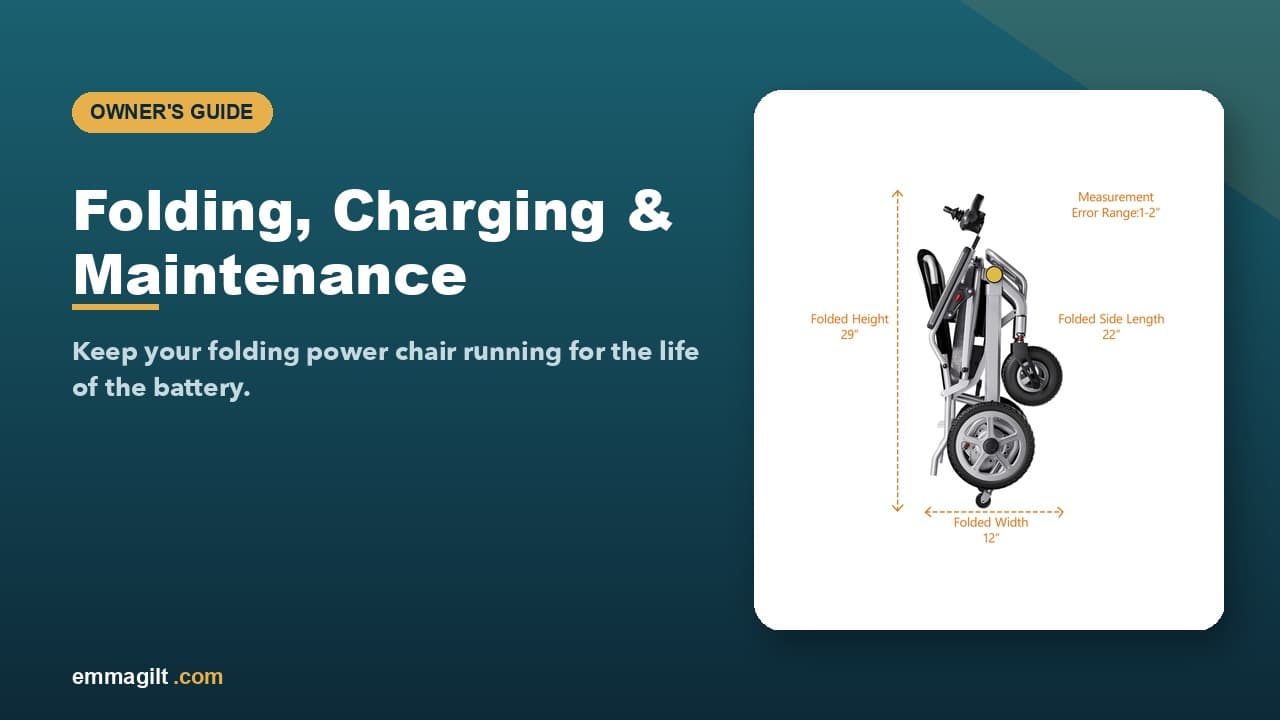
Folding and Unfolding Without Damaging the Frame
Good foldable wheelchair maintenance is mostly small, boring habits - and it is the difference between a chair that lasts five years and one that fades after eighteen months. The expensive parts of a folding power chair (the lithium battery, the brushless motors) are also the most forgiving if you treat them right and the most punishing if you don’t. None of this is hard. It is a few minutes a week and one habit you build around charging.
This guide covers the whole routine: folding and storing without stressing the frame, charging the battery so it keeps its range for years, and the quick weekly checks that catch problems while they are cheap. The principles apply to any folding power chair; we use Kerdom’s lineup for the specifics because its 5-year warranty makes long-term care worth doing properly.
Folding and Unfolding Without Damaging the Frame
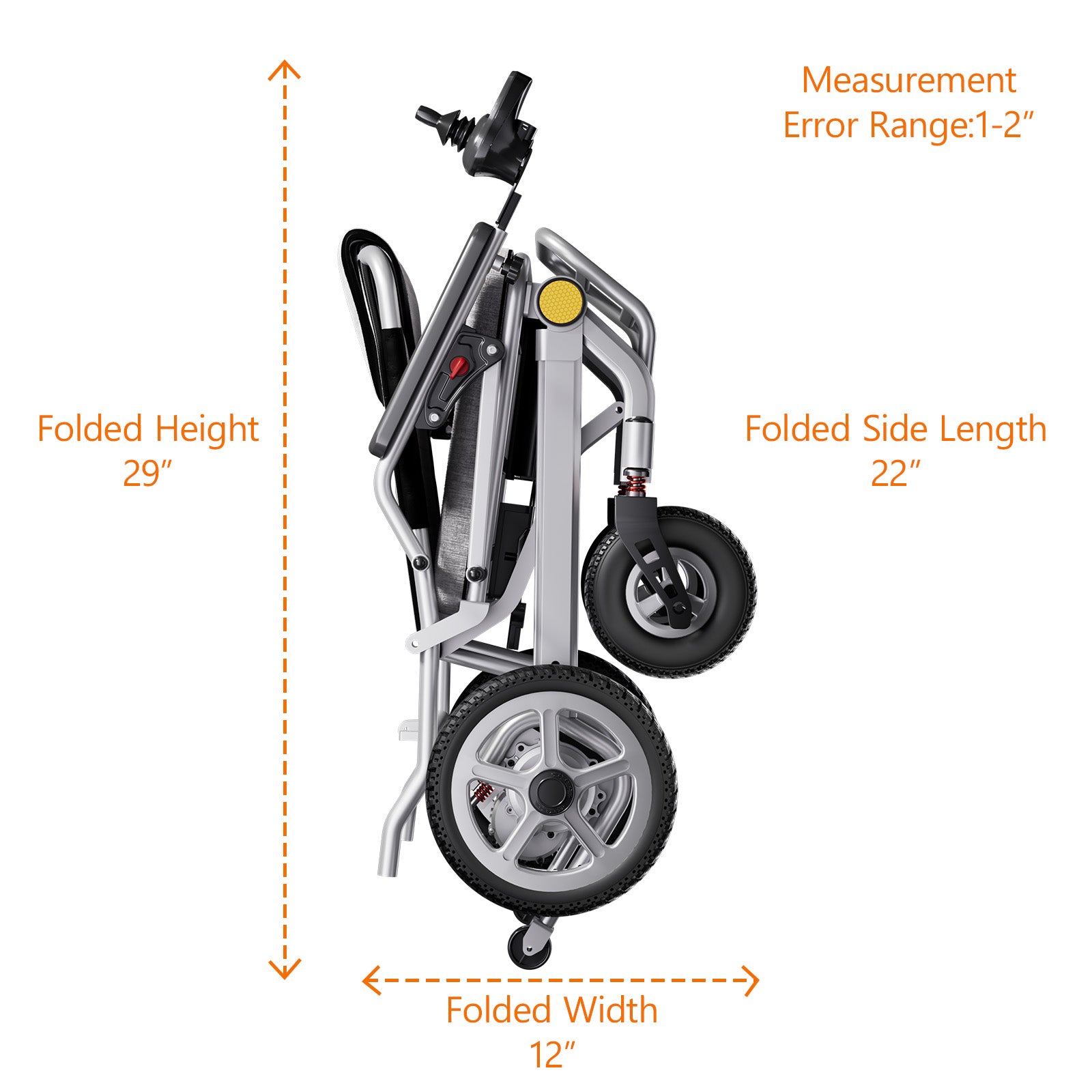
Most folding-chair wear comes from rushing the fold. The frame, the seat fabric, and the wiring all live in the hinge mechanism, so a clean fold protects all three.
The right sequence every time:
- Power off and unplug before folding - never fold a chair that is on or charging.
- Remove the battery if your model allows it. A removed battery means you lift the frame and the battery separately, which is gentler on the hinges and far gentler on your back.
- Fold along the chair’s designed pivot - one smooth motion, not a wrestle. If it resists, something is in the way (footplate, armrest, a loose strap); clear it rather than forcing.
- Engage the transport lock so the folded frame can’t spring open in a car or cargo hold.
Unfolding is the same in reverse, with one addition: listen and feel for the latch to seat fully before you sit. A frame that isn’t locked open is the most common cause of an unexpected collapse. A chair that folds to a tight, predictable shape - like the Kerdom DX08 at 10.2 inches wide - is easier to do this with because there is a clear, repeatable folded position.
Battery Care: The Single Habit That Matters Most
The lithium battery is the most expensive consumable in the chair, and how you charge it decides how long it holds range. A few rules cover almost everything:
- Don’t run it flat. Lithium batteries hate deep discharge. Top up at around 20-30% remaining rather than draining to zero. Routine deep cycling is what kills range early.
- Don’t leave it at 100% for weeks either. For daily use, charging to full is fine. For long-term storage, leave it around 50-60%.
- Use only the supplied charger. Voltage and charge-curve matter; a generic charger is the fastest way to void a warranty and cook a pack.
- Charge at room temperature. Never charge a cold battery straight from a winter car or a hot one straight from the sun. Let it normalize first.
- Unplug when full. Quality chargers cut off, but don’t leave a pack trickling on the charger for days on end.
If you store the chair for a month or more, charge the battery to roughly half, remove it from the chair, and keep it somewhere cool and dry - then top it up to half again every couple of months. A battery stored flat can drop below its recovery voltage and never wake up. This single habit is what protects the most costly part of the chair, and it is the one people skip.
Remember that real-world range is always below the lab figure - plan around two-thirds of the rated miles and you will never get caught out. We explain the why behind that in our buying guide.
Tires, Motors, and Moving Parts
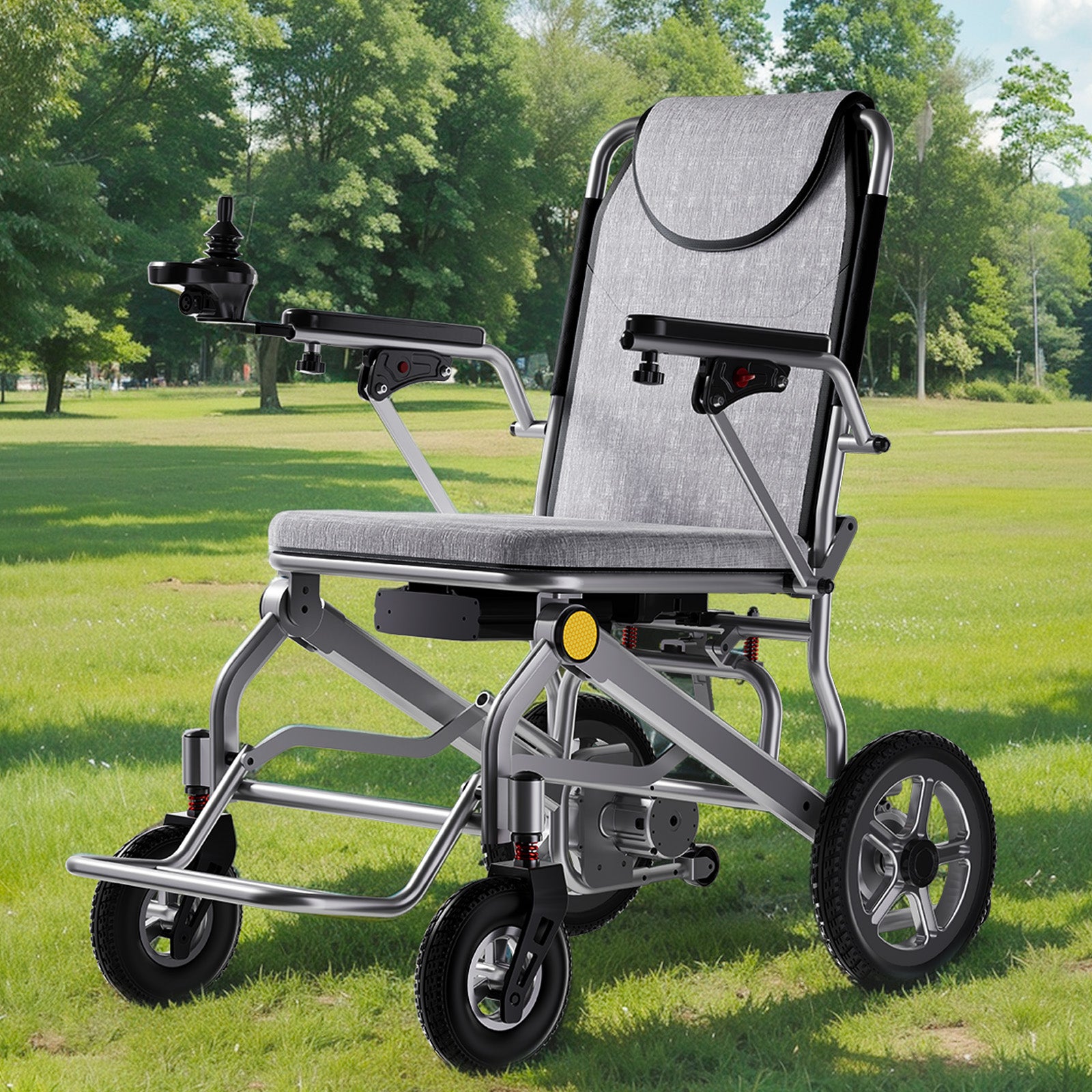
Tires. Almost every folding power chair uses solid, puncture-proof tires, which means no flats and almost no maintenance - but they are not zero. Check monthly for embedded grit, splits, or flat spots from sitting in one position too long, and keep the treads clear so traction stays predictable. If your model has any pneumatic tire, keep it at the rated pressure; an underinflated tire drags on the motor and drains range.
Motors and wheels. Brushless hub motors are sealed and essentially maintenance-free, but they still want to stay dry and clean. After driving through dust, grass, or damp, wipe the wheel hubs and axles so debris doesn’t pack into the bearings. Listen for new noises - a grinding or whirring that wasn’t there before is your early warning, and catching it early usually means a cheap fix.
Hinges, latches, and bolts. The fold mechanism is the busiest joint on the chair. Once a month, check that the pivot bolts and seat fasteners are snug (snug, not over-torqued), and that the fold latch and transport lock click crisply. A drop of light dry lubricant on a stiff hinge keeps the fold smooth; avoid heavy grease that attracts grit.
Cleaning and Storage
Keep cleaning simple and the chair lasts longer:
- Frame and seat: a damp cloth with mild soap. Never hose down a power chair or use a pressure washer - water and electronics don’t mix, and the controller and motor connectors are the parts you least want wet.
- Joystick and controller: wipe with a barely-damp cloth only; keep moisture away from the port and buttons.
- Storage: indoors, dry, out of direct sun and away from freezing temperatures. Heat ages the battery; cold saps range and can crack plastics over time.
If the chair lives in a car between uses, that is fine - just don’t leave the battery baking in a hot trunk or freezing overnight. Bring the battery inside; the frame can stay.
A Simple Maintenance Schedule
Every charge: top up before deep discharge; unplug when full.
Weekly: wipe frame and wheels; check the fold latch and transport lock; glance at tires.
Monthly: check bolt tightness; inspect tires for wear/flat spots; clean hubs; lubricate stiff hinges.
Before storage (1+ month): charge battery to ~50%, remove it, store cool and dry; top up every couple of months.
Every flight or rough trip: re-check latches and bolts afterward (see our airplane travel guide).
Frequently Asked Questions
How long does an electric wheelchair battery last?
With good charging habits - topping up before deep discharge and storing at half charge - a quality lithium pack holds usable range for several years and hundreds of cycles. Routinely draining it flat is what shortens its life fastest.
Can I leave my wheelchair charging overnight?
Occasionally, yes - quality chargers cut off at full. But don’t leave it plugged in for days at a time, and unplug once it reaches 100%. For long storage, keep the battery near 50%, not full.
How often should I service a folding power chair?
A five-minute weekly wipe-and-check plus a monthly look at bolts, tires, and hinges covers almost everything. There are no fluids or belts to replace; the brushless motors and solid tires are essentially maintenance-free.
Can I wash my electric wheelchair?
Only with a damp cloth and mild soap. Never use a hose or pressure washer - water in the controller, motor connectors, or joystick is the quickest way to cause an expensive fault.
What is the most important maintenance habit?
Battery care. Charge before it runs flat, store it at half charge, use only the supplied charger, and keep it out of extreme heat and cold. The battery is the costliest part of the chair, and how you treat it decides the chair’s lifespan.
The Payoff
A folding power chair is a serious purchase, and almost all of its lifespan is in your hands after the box is opened. Fold it cleanly, charge it kindly, keep it dry, and run a five-minute check each week - that routine is the entire secret to a chair that still feels new years later, and it is what makes a long warranty actually matter.
Kerdom backs its folding chairs with a 5-year warranty and a 60-day return window, which only pays off if the chair is cared for - so the maintenance above is also how you keep that coverage valid.
Explore Kerdom’s folding electric wheelchairs on the official site →
New to the category? Start with our lightweight foldable electric wheelchair buying guide, and if cost is on your mind, see our electric wheelchair cost, insurance, and financing guide.
Recommended for you
 Electric Wheelchair Cost, Insurance & Financing: What to Really Expect (2026)
 How to Travel by Plane With an Electric Wheelchair (2026 Guide)
 Power Wheelchair vs Mobility Scooter: Which Is Right for You? (2026)
 Kerdom Wheelchair Comparison: DX04 vs DX07 vs DX08 (2026)
 Kerdom DX05 Review: The 400 lb All-Terrain Folding Power Chair (2026)
 Lightweight Foldable Electric Wheelchairs: The Complete 2026 Buying Guide