Power Wheelchair vs Mobility Scooter: Which Is Right for You? (2026)
Power wheelchair vs mobility scooter: which mobility device fits your life? Our 2026 guide compares control, comfort, indoor use, range, and travel to help you choose.
The Core Difference in One Sentence
When you start shopping for a personal mobility device, you quickly hit a fork that most buyers do not expect: should you get a power wheelchair or a mobility scooter? They solve the same broad problem - getting around independently when walking distances is hard - but they are built very differently, and the wrong choice means a device that fights your daily life instead of fitting it.
The confusion is understandable. Both run on batteries, both fold for travel, both come in lightweight models now. But the way you control them, where they fit, and who they suit are genuinely different. This guide breaks down the power wheelchair vs mobility scooter decision the way it actually matters - control, comfort, indoor use, range, and travel - using Kerdom’s lineup, which makes both, as concrete examples.
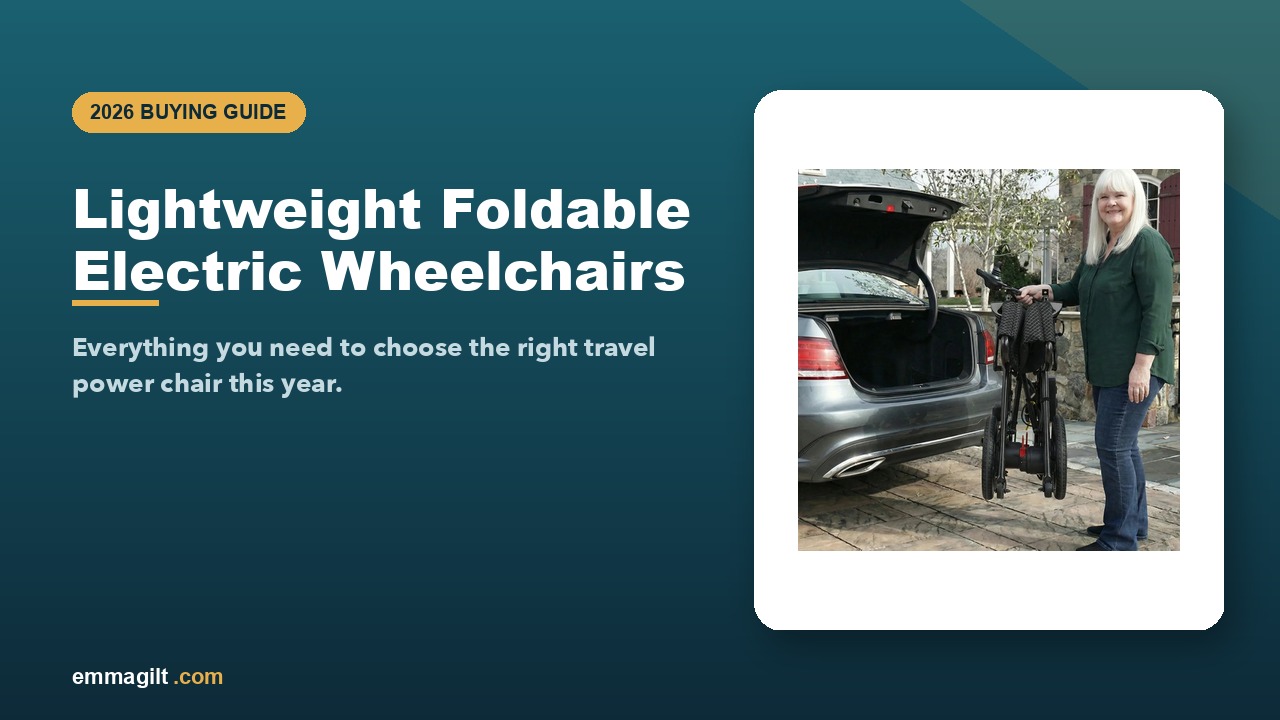
For the wheelchair side of the equation in more depth, our complete guide to lightweight foldable electric wheelchairs goes deeper. Here, the focus is the choice between the two device types.
The Core Difference in One Sentence
Strip away the marketing and it comes down to this: a power wheelchair is controlled by a joystick and built to turn in place for tight indoor living; a mobility scooter is steered by a handlebar tiller and built for longer outdoor distances with more upper-body effort.
Everything else - comfort, range, portability, who each suits - flows from that one structural difference. Get the control and turning model right for your body and your environment, and the rest of the decision falls into place.
How a Power Wheelchair Works
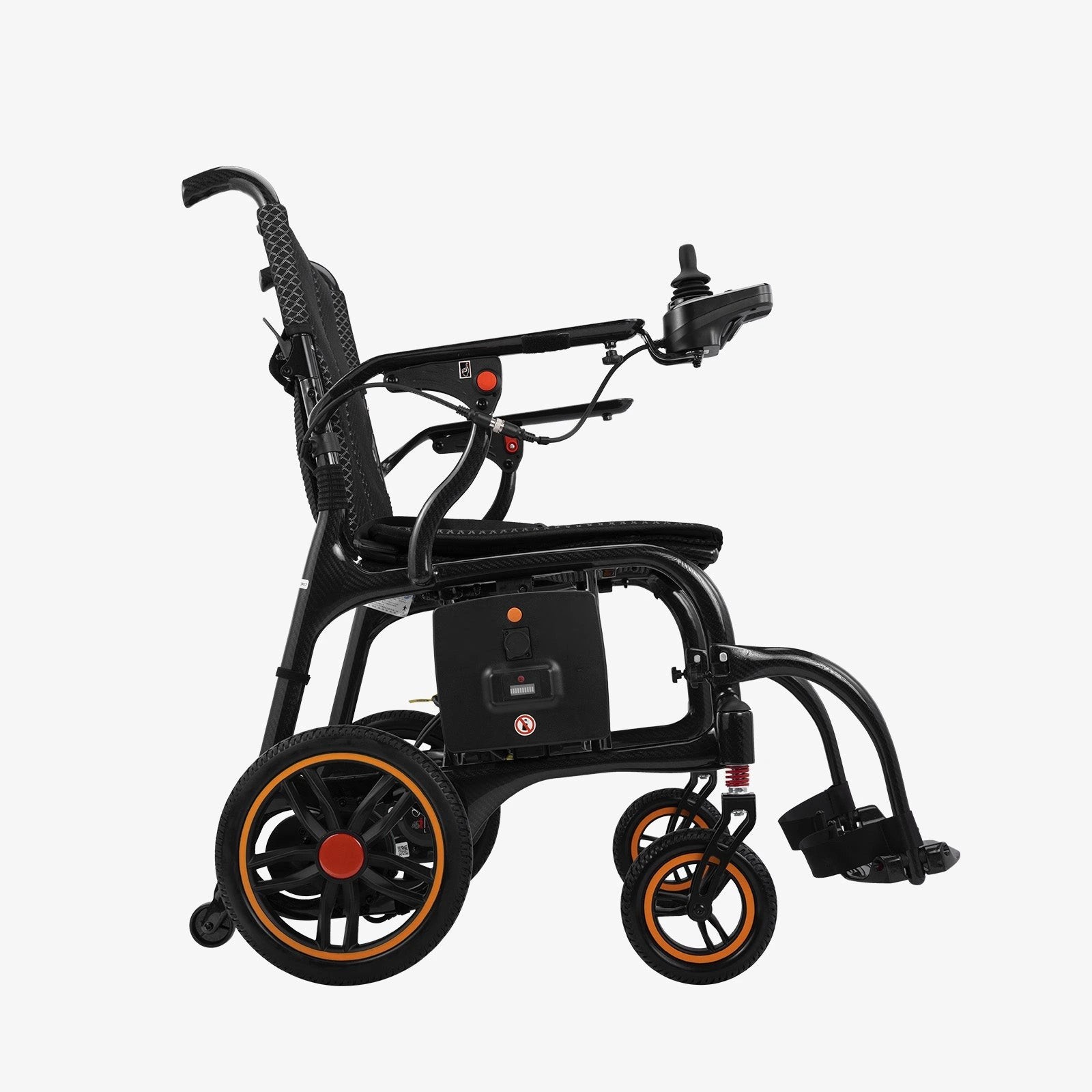
A power wheelchair puts the motors under the seat and drives the rear wheels independently, steered by a small joystick on the armrest. That layout produces the wheelchair’s defining strength: a tight turning radius - around 22 inches on Kerdom’s folding models - that lets it pivot almost in place. It can navigate narrow hallways, turn inside a standard bathroom, and pull up to a table or counter without a three-point maneuver.
Because the joystick needs only light hand and finger movement, a power chair suits riders with limited upper-body strength or stamina - anyone who could not comfortably steer a handlebar or twist to look behind them. The seat is a supportive wheelchair seat with a proper backrest and flip-up armrests, designed for sitting all day and for users who need postural support.
The tradeoff is that power chairs are generally built for indoor and around-town use rather than covering long outdoor distances at speed. Kerdom’s folding chairs cap at a walking-pace 3.73 mph. If your life is mostly homes, shops, offices, medical visits, and tight spaces, that is exactly right. Models like the ultra-light DX08 and the all-rounder DX07 are built around this indoor-friendly, low-effort-control profile.
How a Mobility Scooter Works
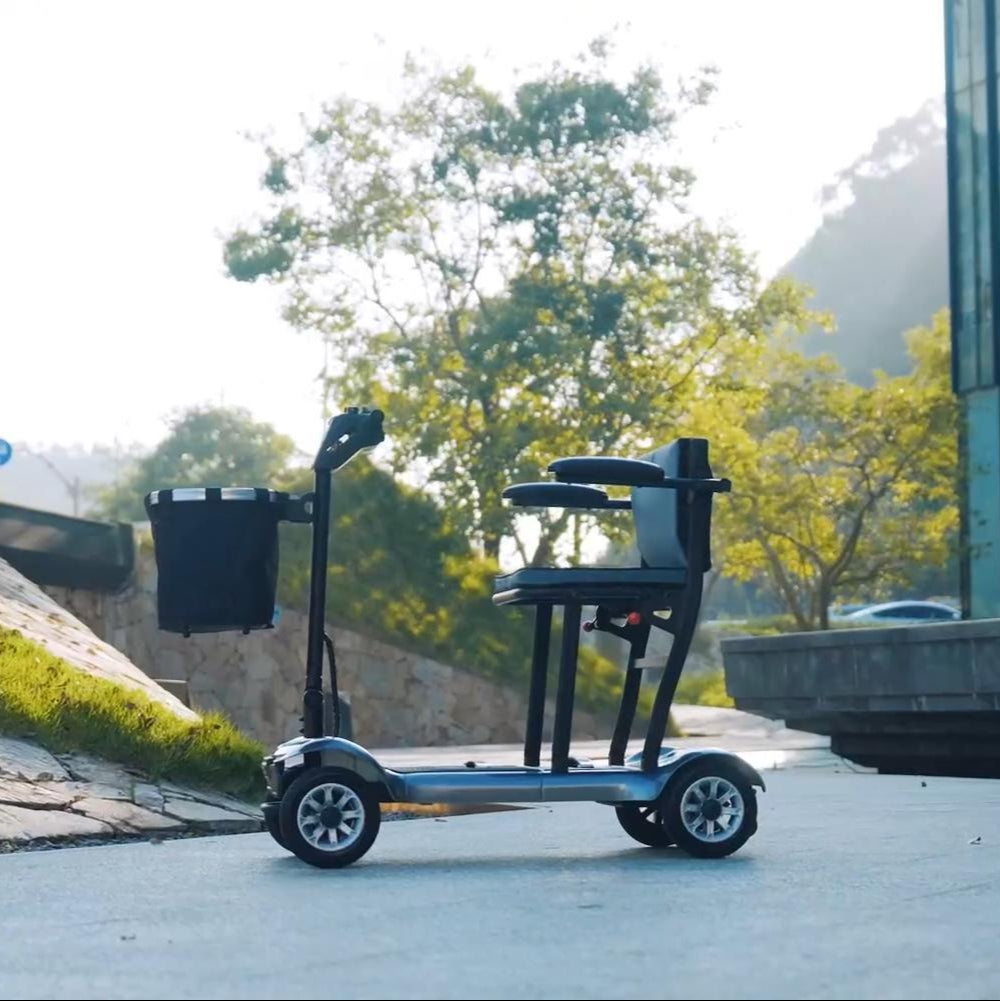
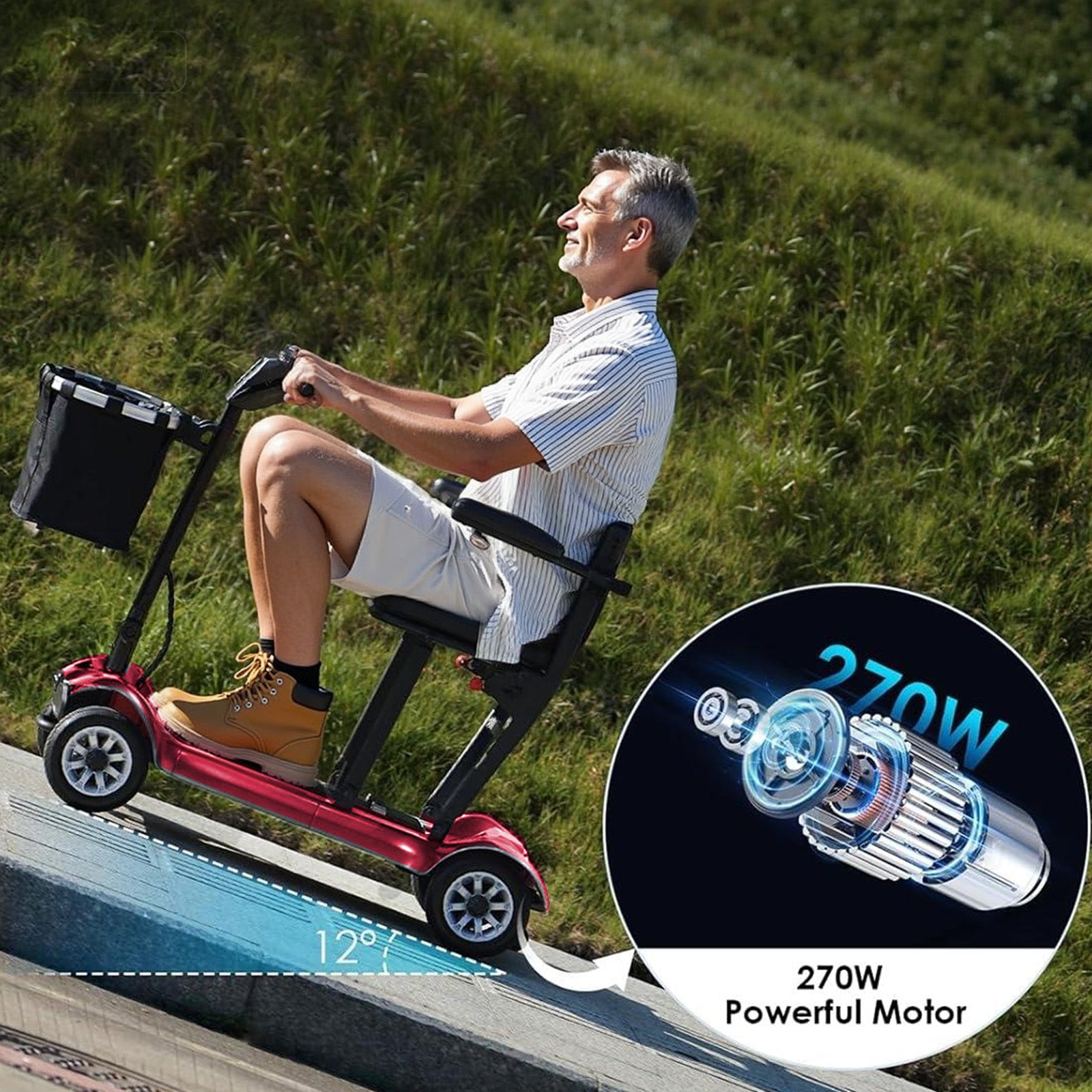
A mobility scooter is a different machine. You sit higher, steer with a handlebar tiller using both hands, and twist a throttle to go - much closer to riding a small vehicle than operating a chair. Kerdom’s MS001 foldable scooter is a representative example: a 4-wheel design, a 270W motor, a top speed of 5 mph (noticeably faster than the chairs), and a 9.5–18.6-mile range for genuine outdoor distance.
That design makes scooters excellent for longer outdoor trips - shopping centers, parks, markets, neighborhood errands, cruise decks - where the extra speed and range matter and tight indoor turning does not. The seat sits above the steering column with a comfortable cushion, and the higher vantage point suits riders who want visibility and a more upright, vehicle-like posture.
But the tiller is the catch. Steering a scooter and twisting the throttle requires functional upper-body strength, grip, and the ability to turn and look - and the turning radius is far wider (the MS001 needs about 54 inches versus a power chair’s 22). A scooter will not pivot in a narrow hallway or turn inside a small bathroom. It is an outdoor-and-open-spaces device first.
The Practical Differences That Decide It
Put the two side by side on the things that actually shape daily use:
| Power Wheelchair | Mobility Scooter | |
|---|---|---|
| Control | Joystick (light hand movement) | Tiller + throttle (both hands, grip) |
| Turning radius | ~22″ - pivots in place | ~54″ - needs open space |
| Indoor use | Excellent (halls, bathrooms) | Limited (too wide) |
| Outdoor distance | Good (around-town) | Excellent (longer trips) |
| Top speed | ~3.73 mph | ~5 mph |
| Seating/posture | Supportive chair seat | Higher, upright seat |
| Best for | Limited upper-body strength, tight spaces | Good upper-body strength, outdoor range |
The pattern is clear. A power wheelchair wins anywhere space is tight and control needs to be effortless. A scooter wins anywhere distance and speed matter and there is room to maneuver. Neither is “better” - they are built for different lives.
Travel: Both Can Fly, With a Caveat
Good news if you travel: modern versions of both fold and clear airline rules. Kerdom’s foldable scooters and folding power chairs alike use removable lithium batteries that qualify as mobility-aid batteries under US Department of Transportation rules, which airlines must accept up to 300Wh - a different, more permissive standard than the 160Wh limit on ordinary carry-on batteries. We cover the full airline process in our guide to flying with an electric wheelchair, and the same battery logic applies to scooters.
The practical difference for travel is weight and fold. The ultra-light DX08 power chair folds smaller and lighter than most scooters, so for pure air-travel packability a folding power chair often has the edge. For longer days at the destination - exploring a city, a resort, a cruise - a scooter’s range and speed can be the better tool. Some frequent travelers genuinely benefit from owning one of each.
How to Choose: A Simple Test
You can usually settle the power wheelchair vs mobility scooter question with four honest answers:
- Can you comfortably steer a handlebar and twist to look behind you? No → power wheelchair. Yes → scooter is on the table.
- Where will you use it most? Tight indoor spaces and around town → power wheelchair. Longer outdoor distances → scooter.
- How much postural support do you need? Significant → power wheelchair’s supportive seat. Minimal, you sit upright easily → either works.
- What is the priority - maneuverability or range/speed? Maneuverability → power wheelchair. Range and speed → scooter.
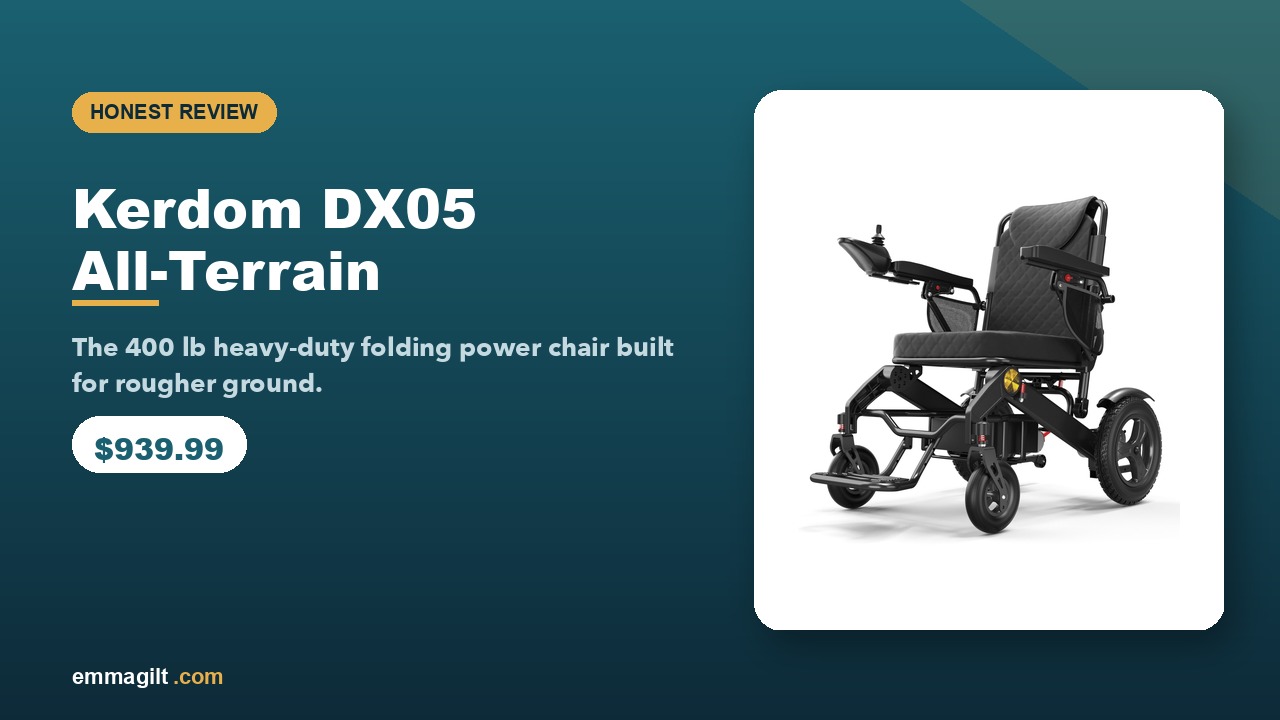
If your answers point to a power wheelchair, our Kerdom wheelchair comparison helps you pick the right model; if you need capacity and rough-ground capability, look at the heavy-duty DX05. If they point to a scooter, Kerdom’s foldable MS-series is built on the same 5-year-warranty, removable-battery foundation.
The Bottom Line
The power wheelchair vs mobility scooter decision is not about which device is more capable - it is about which one matches your body and your environment. Choose a power wheelchair if you need effortless joystick control, tight indoor maneuverability, and a supportive seat. Choose a mobility scooter if you have the upper-body function to steer a tiller and your priority is outdoor range and speed.
Answer the four questions above honestly and the right device becomes obvious. From there, the model reviews and comparisons linked throughout get you the rest of the way to the chair - or scooter - that actually fits your life.
Power Wheelchair vs Mobility Scooter: Common Questions
Is a power wheelchair or a mobility scooter better for indoor use?
A power wheelchair, clearly. Its ~22-inch turning radius lets it pivot in place, navigate narrow hallways, and turn inside a standard bathroom. A scooter needs roughly 54 inches to turn and is built for open outdoor space, not tight rooms.
Which is easier to control?
A power wheelchair, for most users with limited upper-body strength. The joystick needs only light hand movement, while a scooter’s tiller requires both hands, grip, and the ability to twist and look behind you. If steering a handlebar is difficult, choose the chair.
Which goes faster and farther?
The scooter. Kerdom’s MS001 reaches 5 mph against the chairs’ 3.73 mph, and scooters are generally tuned for longer outdoor range. If your priority is covering distance outdoors, the scooter has the edge.
Can I take either one on a plane?
Yes. Both Kerdom’s folding power chairs and foldable scooters use removable, airline-acceptable mobility-aid batteries. For pure packability the ultra-light DX08 chair often folds smaller, but foldable scooters fly too - see our airline guide.
Can I use a scooter if I have weak hands or arms?
Generally no - the tiller and throttle demand functional grip and upper-body movement. That is the single most important reason the power wheelchair exists, and the main fork in this decision.
Browse Kerdom’s full range of power chairs and scooters →
Leaning toward a power chair? Read the complete buying guide and the Kerdom wheelchair comparison to pick your model.
Recommended for you
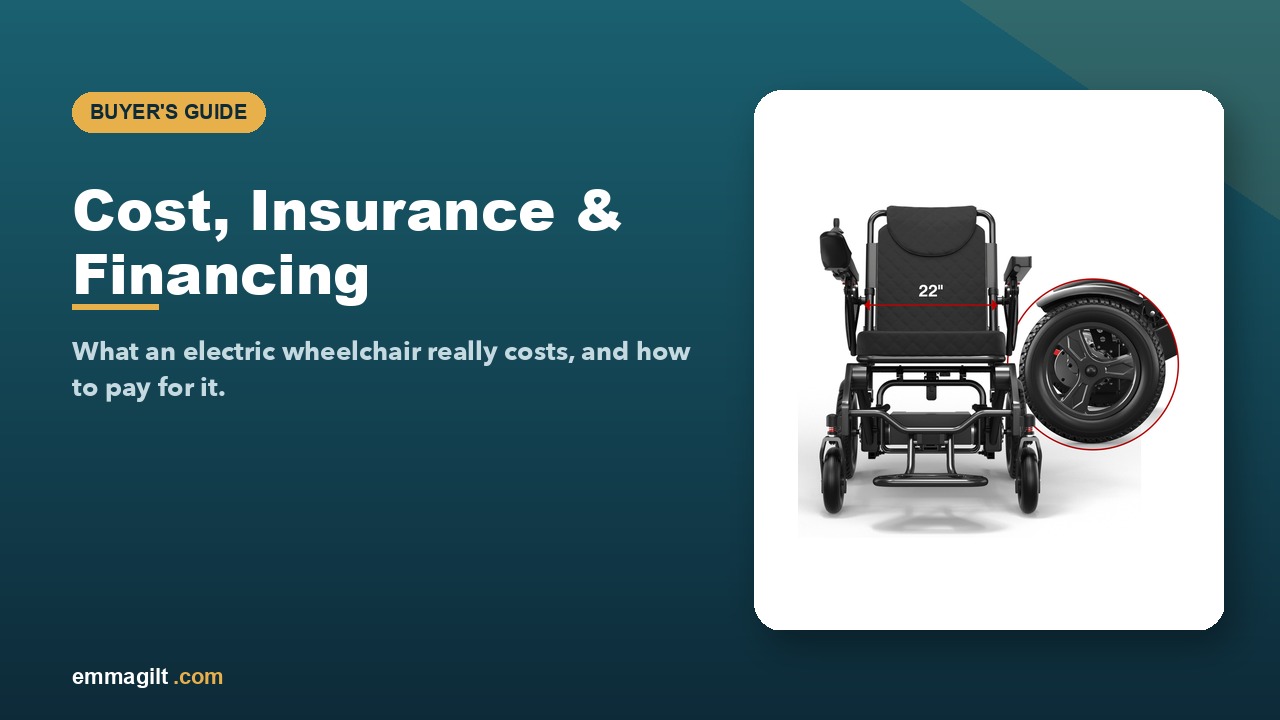 Electric Wheelchair Cost, Insurance & Financing: What to Really Expect (2026)
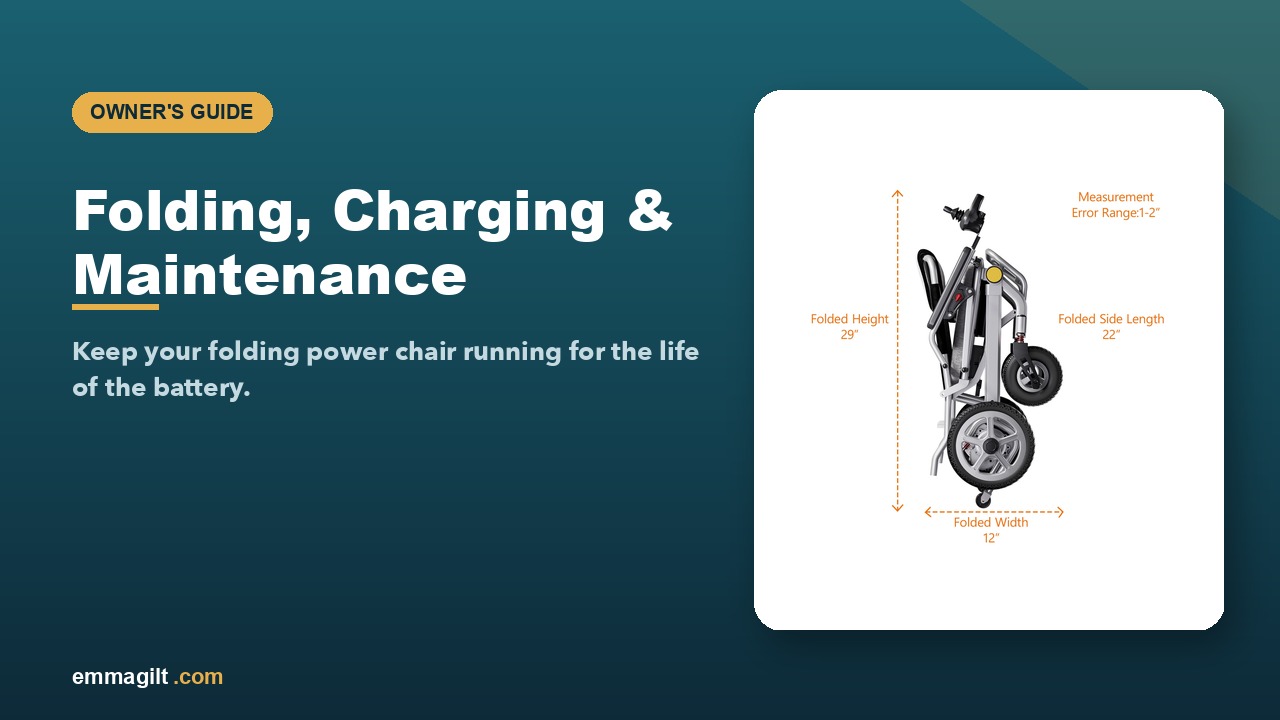 Foldable Electric Wheelchair Maintenance: Folding, Charging & Care (2026)
 How to Travel by Plane With an Electric Wheelchair (2026 Guide)
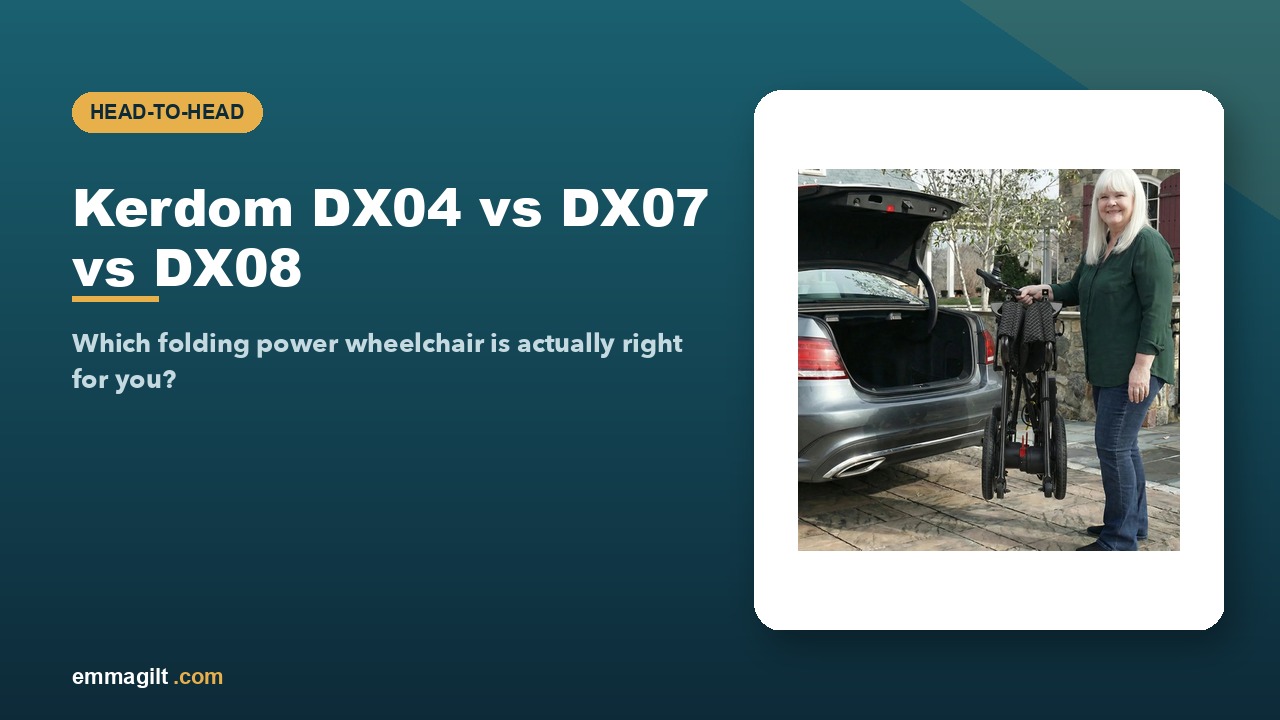 Kerdom Wheelchair Comparison: DX04 vs DX07 vs DX08 (2026)
 Kerdom DX05 Review: The 400 lb All-Terrain Folding Power Chair (2026)
 Lightweight Foldable Electric Wheelchairs: The Complete 2026 Buying Guide