Lightweight Foldable Electric Wheelchairs: The Complete 2026 Buying Guide
A lightweight foldable electric wheelchair can change how you travel and live. Our 2026 guide explains weight, battery, range, airline rules, and how to choose the right model.

What “Lightweight” Really Means in a Power Chair
A lightweight foldable electric wheelchair is one of those purchases that quietly rewrites your week. The right one means you take the trip, make the appointment, join the family lunch, and load the chair into the car yourself instead of waiting on someone’s help. The wrong one sits in a hallway because it is too heavy to move, too short on range to trust, or too bulky to fit anywhere.
The category has changed fast. Five years ago, a folding power chair that weighed under 40 pounds and cleared airline rules barely existed outside specialist catalogs at four-figure premiums. Today, carbon fiber frames and removable lithium batteries have pushed those features down to prices ordinary buyers can reach. The flip side is a crowded market full of near-identical listings and spec sheets engineered to look better than the chair performs.
This guide cuts through it. It explains the four things that actually decide whether a lightweight folding power chair works for you - weight, battery, capacity, and terrain - then shows how to match those to your real routine, using Kerdom’s lineup as a worked example because it spans the full range from a $769 budget chair to a 25.8-pound carbon flagship.
What “Lightweight” Really Means in a Power Chair
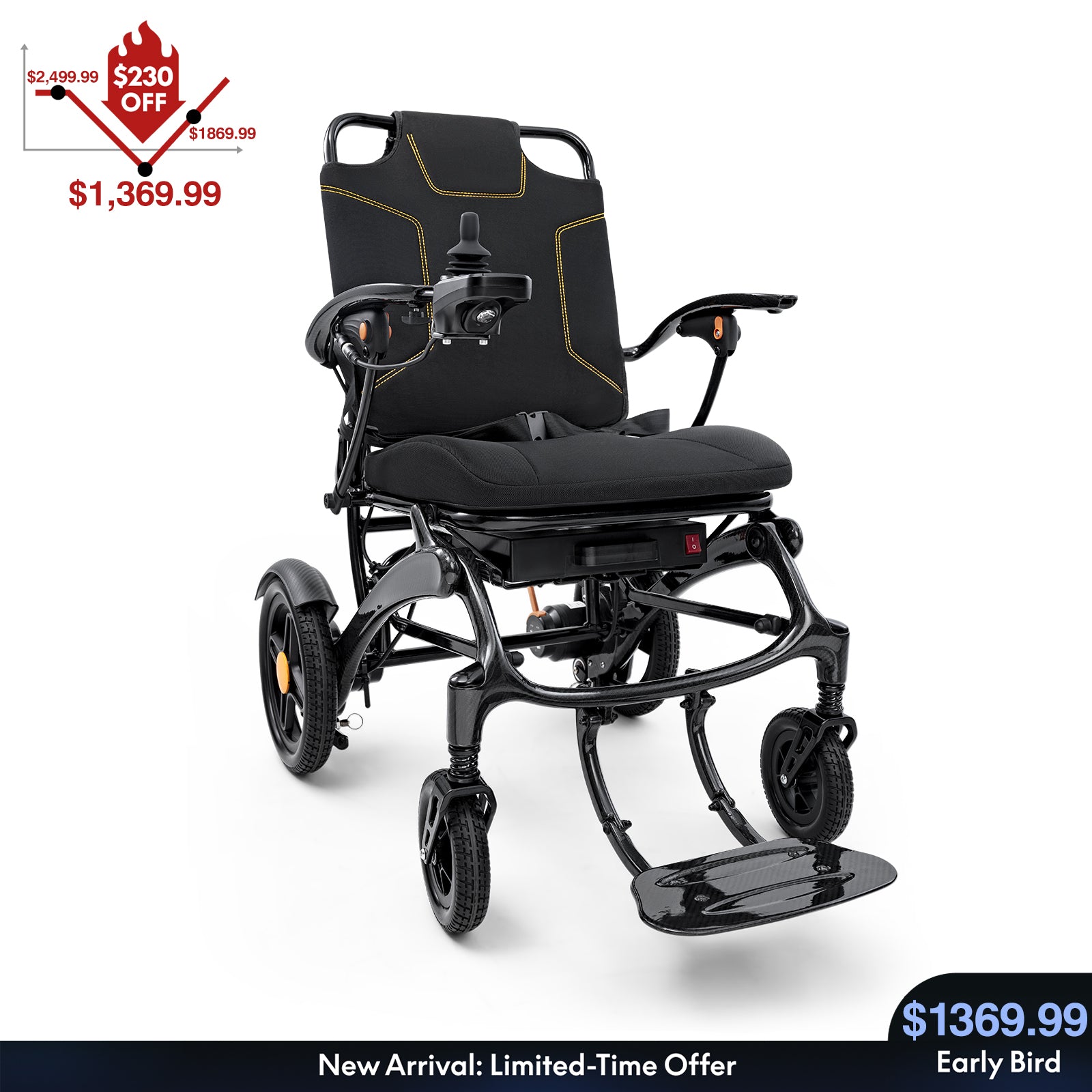
“Lightweight” is the most abused word in this category, so pin it down before you shop. Folding electric wheelchairs sort into three honest weight tiers:
- Standard folding (40–60 lbs). Sturdy, often roomier seats and higher capacities, but a real two-person lift into a vehicle. Fine if the chair lives in one place; a daily struggle if you load it often.
- Lightweight (33–42 lbs). The sweet spot for most buyers. One average-strength adult can fold and load it, especially with a removable battery that comes out separately. Capacity and seat width stay generous.
- Ultra-light (under 30 lbs). Carbon fiber territory. Genuinely effortless to lift and stow, ideal for constant flyers and caregivers - but usually with a lower weight capacity and a firmer ride as the cost of shedding pounds.
Two details matter when you read a weight figure. First, check whether the number is with or without the battery - a “25.8 lb” chair may be 29.8 lbs once the 4-pound battery is in. Second, a removable battery is what makes a lift manageable regardless of the headline weight, because you carry the frame and the battery in two trips instead of one heavy one.
Battery, Range, and the Airline Question
A folding power chair is only as free as its battery lets it be, so this is where to spend your attention.
Range. Manufacturers quote a best-case lab number. In real use - average rider weight, some inclines, normal temperatures - expect to get roughly two-thirds of the rated range. A chair rated for 15 miles will reliably deliver 10–13; one rated for 20 will give you a confident 13–15. For home, neighborhood, campus, and errand use, anything from 10 miles up is a full day. For all-day outings or travel, look for a dual-battery option that roughly doubles it.
The airline rule everyone gets wrong. Loose lithium batteries are capped at 100Wh freely and 160Wh with approval - and many guides wrongly apply that limit to wheelchairs. They shouldn’t. Under the US Air Carrier Access Act, a battery that powers a mobility device is a mobility-aid battery, and airlines must accept it, including a removed or spare battery up to 300Wh. That is why a chair with a 180Wh or 240Wh pack is still travel-legal when a 240Wh power bank would be refused. The practical requirements are simple: notify the airline at booking, remove the battery to travel in the cabin, and carry the spec sheet so a gate agent checks it against the 300Wh mobility limit, not the 160Wh carry-on limit. We walk through the full process in our guide to traveling by plane with an electric wheelchair.
Capacity, Seat, and Terrain: Matching the Chair to You
Weight and battery decide portability; these three decide whether you are comfortable in the chair all day.
Weight capacity. Match it honestly to the rider, with margin. Ultra-light carbon chairs often cap at 300 pounds - the price of the light frame - while many lightweight aluminum chairs carry 350. If the rider is near a limit, size up a tier; the frame should never be working at its ceiling.
Seat width. This is the spec buyers most often get wrong. A 17.5-inch seat suits small-to-average frames; 18.5 inches fits most adults comfortably; broader riders need a wide-seat or bariatric model. A chair that is light and cheap but too narrow is the wrong chair.
Terrain and tires. Almost every folding power chair uses puncture-resistant solid tires - you will never get a flat, but you trade away some cushioning, so the ride is firmer over broken sidewalk or cobblestone. If most of your driving is indoors and on pavement, this is a non-issue. If you spend real time on grass or gravel, prioritize motor power (look for 300W+ combined) and larger rear wheels over the lightest possible frame.
The Kerdom Lineup, Decoded
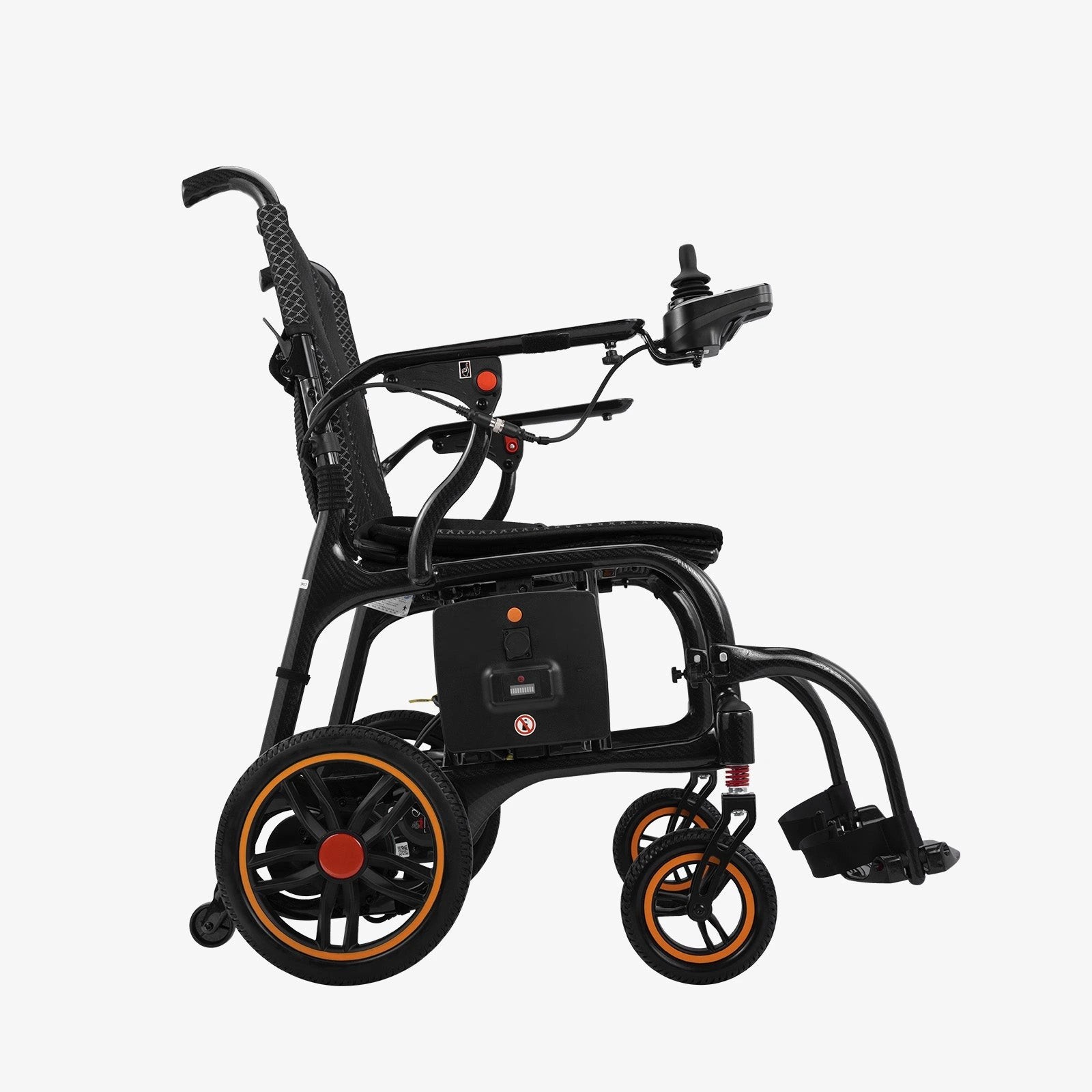
Kerdom is a useful case study because its folding power chairs span the entire range above, which makes the tradeoffs concrete. Here is how its three core lightweight models compare:
| DX04 | DX07 | DX08 | |
|---|---|---|---|
| Price | $769.99 | $1,369.99 | $1,769.99 |
| Weight (no battery) | 33 lbs | 36.5 lbs | 25.8 lbs |
| Capacity | 350 lbs | 350 lbs | 300 lbs |
| Range | 15 mi | 15.5 mi | 13.5–20.5 mi |
| Seat width | 17.5″ | 18.5″ | 18.85″ |
| Frame | Aluminum | Carbon + alloy | Carbon fiber |
| Folded width | 12″ | 14″ | 10.2″ |
| Remote | No | No | Yes |
| Best for | Budget buyers | All-rounder | Frequent travelers |
The pattern is clear. The DX04 is the value pick - it gets the fundamentals right for under $800 with the highest capacity of the three. The DX07 is the balanced all-rounder, with a roomier seat and a sturdier outdoor ride. The DX08 is the portability specialist - a 25.8-pound carbon frame that folds to 10.2 inches and adds a Bluetooth remote, for buyers whose whole decision rests on how easily they can move the chair.
If you mostly need to know which one fits you, our head-to-head Kerdom wheelchair comparison puts them side by side on every spec that matters.
Power Wheelchair or Mobility Scooter?
One more fork before you buy: some shoppers in this category are actually better served by a folding mobility scooter than a power chair. The quick rule - a power wheelchair turns in place, fits tight indoor spaces, and supports riders who need trunk and posture support; a mobility scooter is built for longer outdoor distances and riders with more upper-body stability who mainly need range and a comfortable seat. If you are unsure which side of that line you fall on, our power wheelchair vs mobility scooter guide breaks down the decision in detail.
How to Choose: A Simple Decision Path
Put it together and the choice usually resolves in four questions:
- How often will you lift it? Daily → ultra-light carbon (DX08). Occasionally → lightweight aluminum (DX04/DX07).
- What is your budget? Under $800 → DX04. Up to ~$1,400 → DX07. Portability at any cost → DX08.
- How wide a seat do you need? Small-average → DX04. Most adults → DX07/DX08. Broad → step up to a wide-seat model.
- Will you travel by air? Then confirm the battery is removable and under 300Wh - all three Kerdom models qualify - and read the airline guide before you book.
Whatever you choose, factor in the things beyond the spec sheet: warranty length (Kerdom backs all three for 5 years, against the 1-year norm), a real return window (60 days here), and the long-term cost of ownership, which we cover in our electric wheelchair cost and insurance guide. And once the chair arrives, our folding, charging, and maintenance guide helps you keep it running for the full life of the battery.
The Bottom Line
A lightweight foldable electric wheelchair is worth getting right because it is not really a piece of equipment - it is access to your own life. The good news in 2026 is that the technology has matured: carbon frames, removable lithium batteries, and travel-legal designs are no longer luxury features, and brands like Kerdom now offer a clear ladder from a $769 budget chair to a 25.8-pound carbon flagship, all under the same 5-year warranty.
Anchor your decision to how you actually live - how often you lift, how far you roam, how wide you sit, and whether you fly - and the right model picks itself. From there, the reviews linked throughout this guide get you the rest of the way.
Browse Kerdom’s full range of folding electric wheelchairs →
Ready to go deeper? Read our full reviews of the Kerdom DX04, DX07, and DX08, or compare all three in our head-to-head guide.
Recommended for you
 Electric Wheelchair Cost, Insurance & Financing: What to Really Expect (2026)
 Foldable Electric Wheelchair Maintenance: Folding, Charging & Care (2026)
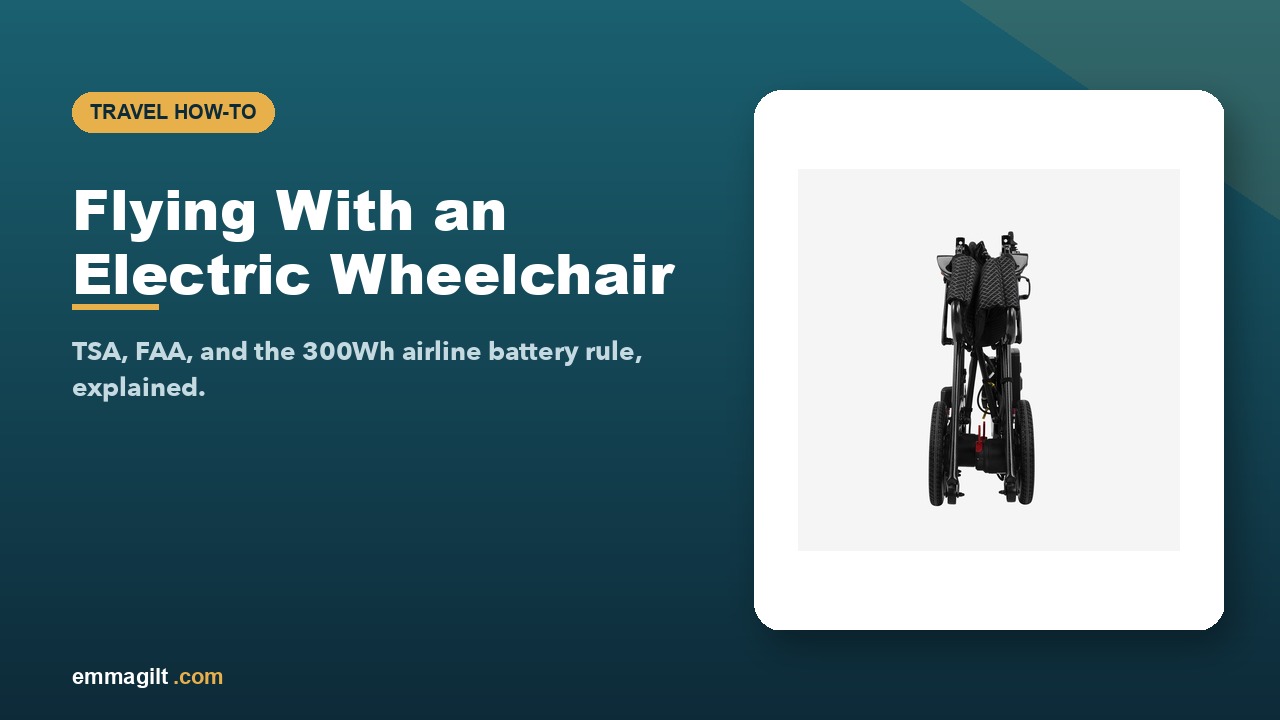 How to Travel by Plane With an Electric Wheelchair (2026 Guide)
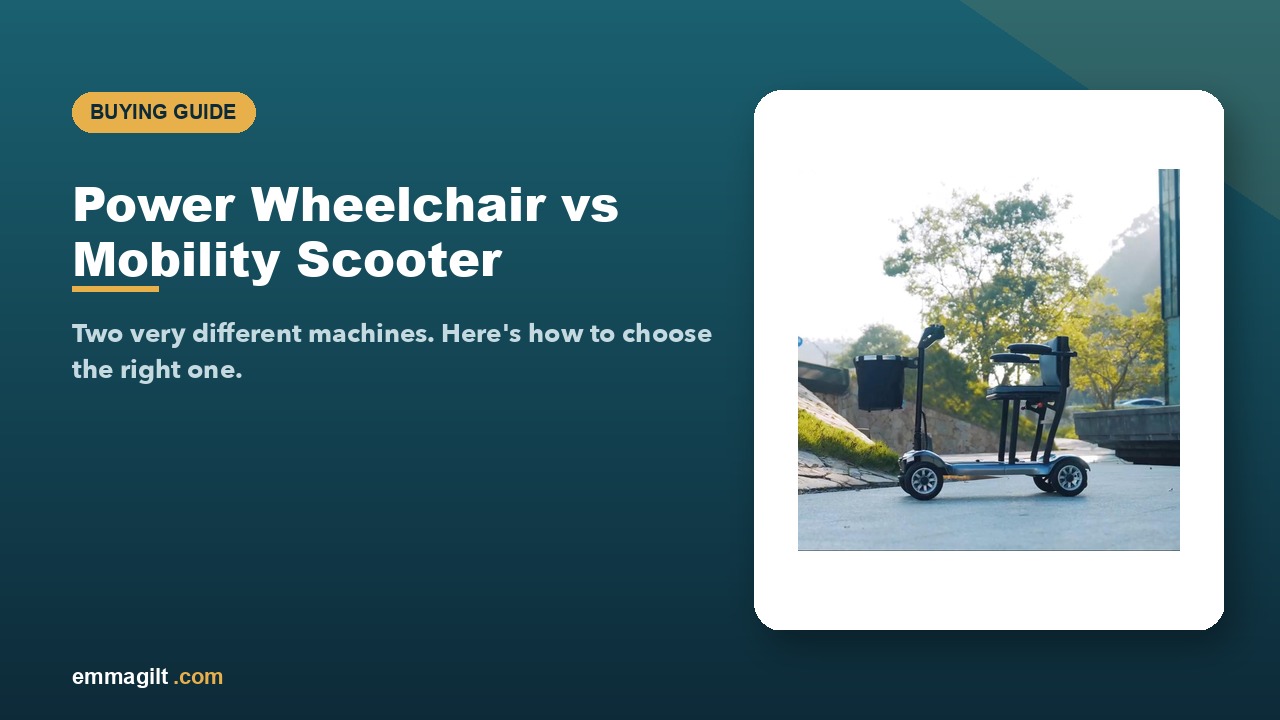 Power Wheelchair vs Mobility Scooter: Which Is Right for You? (2026)
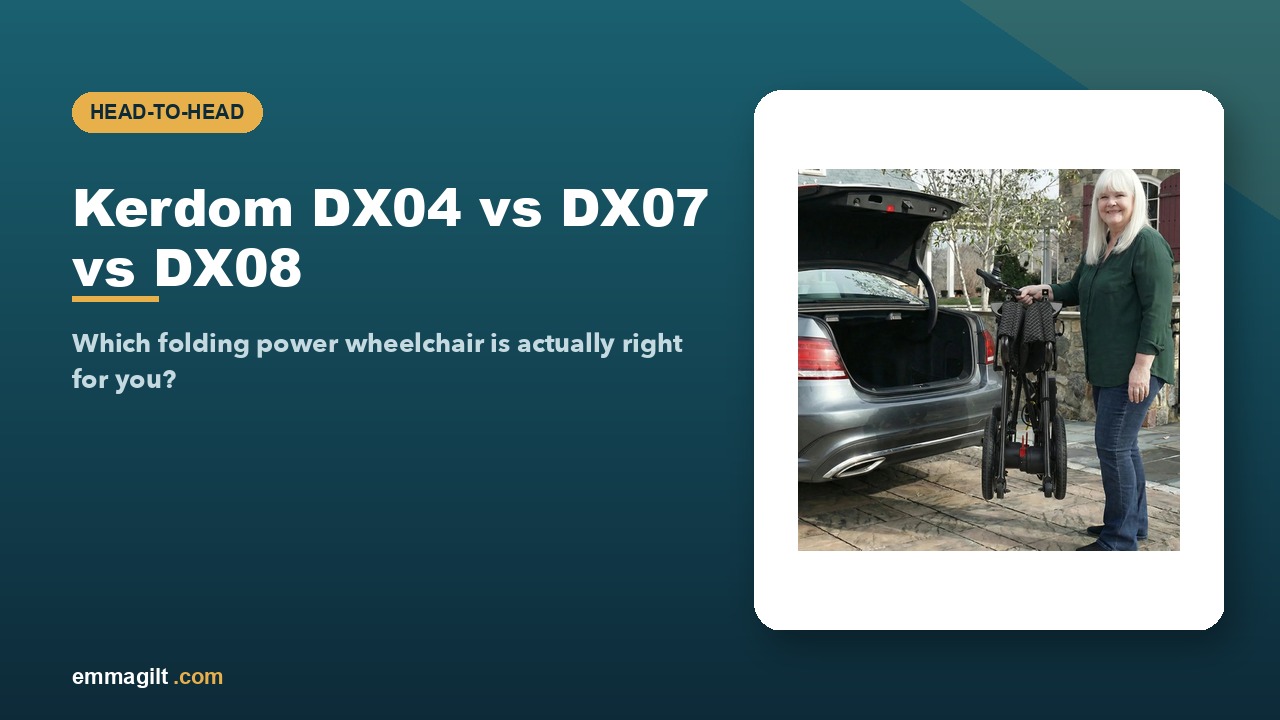 Kerdom Wheelchair Comparison: DX04 vs DX07 vs DX08 (2026)
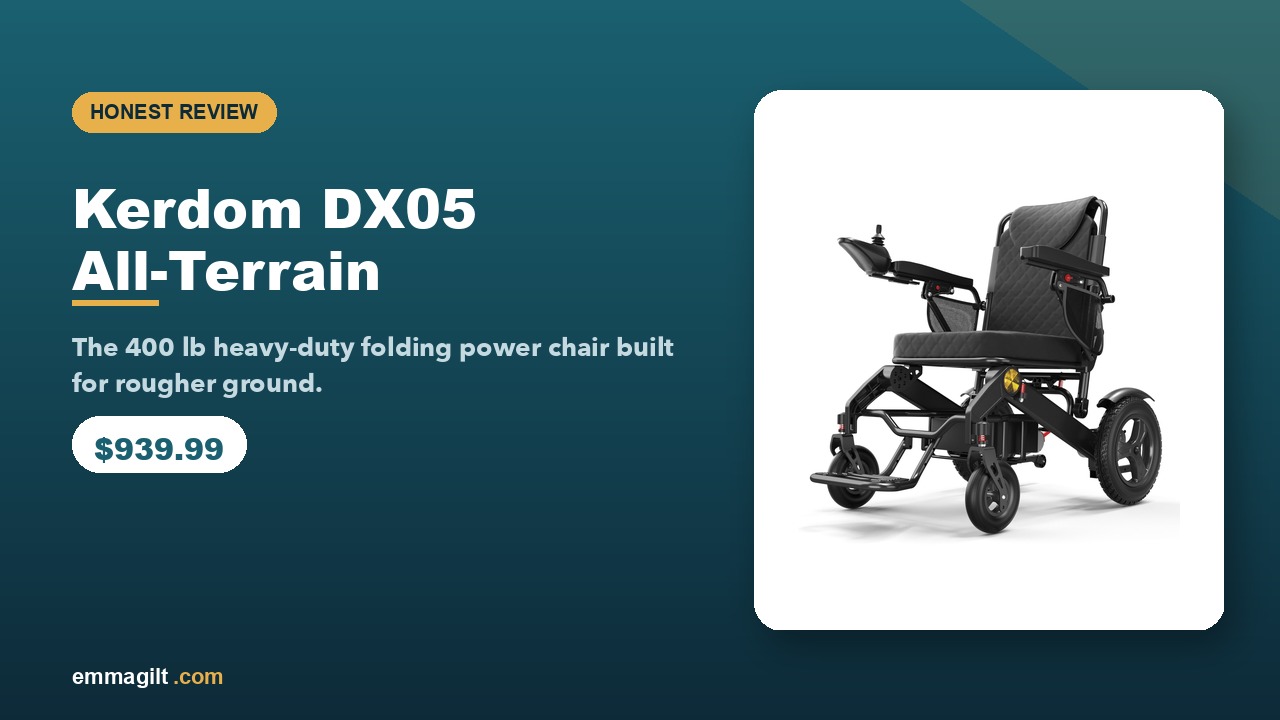 Kerdom DX05 Review: The 400 lb All-Terrain Folding Power Chair (2026)