Tapeher Mouth Tape Review: Does It Actually Stop Snoring? 2026
Honest Tapeher mouth tape review: does the X-shape design stop snoring, improve sleep quality, and stay on all night? 30-night wear test results inside.

What Is Tapeher Mouth Tape?
- What Is Tapeher Mouth Tape?
- First Night: Comfort, Adhesion, and the Claustrophobia Question
- Does Tapeher Actually Stop Snoring?
- Tapeher Mouth Tape Review: What the Science Says About Nasal Breathing
- Sleep Quality After 30 Nights
- Honest Complaints and Limitations
- Long-Term Use: Is It Sustainable?
- Who Should Buy Tapeher
Mouth tape is a product that provokes strong reactions before people try it. The concept — sticking tape over your lips before sleeping — sounds uncomfortable at minimum and counterintuitive at worst. This Tapeher mouth tape review covers 30 nights of actual use, starting from that exact skepticism and reporting what happened without promotional softening.
The summary: Tapeher does what it claims. It keeps the mouth closed through the night for most users, the X-shape design resolves the tolerance problem that causes most mouth tape abandonment, and the snoring reduction effect is real for mouth-breathing snorers. The nuances, limitations, and the question of whether it works for non-mouth-breathing snorers are below.
What Is Tapeher Mouth Tape?
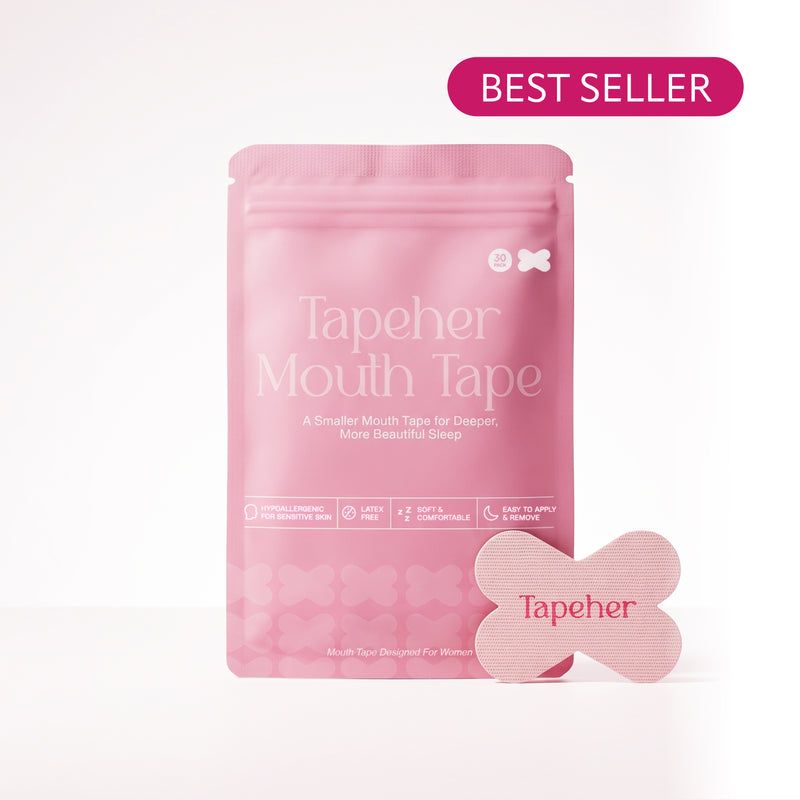
Tapeher is a Canadian brand that makes mouth tape specifically engineered for sleep use. The flagship product — Tapeher Mouth Tape, $32.99 CAD — is a pre-cut X-shape strip of hypoallergenic adhesive material that is applied to the lips before bed to encourage nasal breathing during sleep.
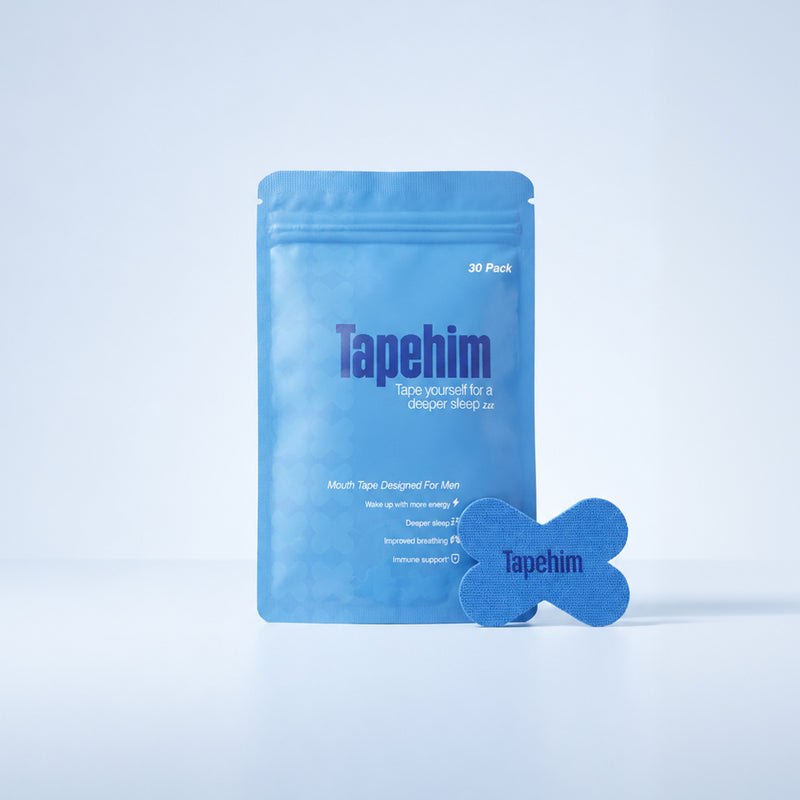
The brand also makes Tapehim (same product, male-targeted), Tapeher Mini (smaller coverage variant for first-timers), and Tapeher Nose Strips (nasal dilator strips for nights when congestion compromises nasal airflow). Bundles are available at 20-25% savings.
The product has 675 reviews averaging 4.71 stars, which is a meaningful signal for a product that people either love or find completely unusable. A 4.71 average with hundreds of reviews suggests that while not every user has a positive experience, the majority are satisfied enough to rate it highly.
First Night: Comfort, Adhesion, and the Claustrophobia Question
Night one with any mouth tape is the tolerance test, not the sleep quality test. The question is whether you can fall asleep with something stuck to your lips. For many people who have tried mouth tape and abandoned it, this is where they stopped.
The Tapeher X-shape is the design feature that changes this dynamic. A standard rectangular strip seals the lips from corner to corner. The Tapeher cut leaves the lip corners open — the tape covers the center two-thirds of the lip area while allowing the edges to part slightly. This means that if you start to feel restricted or anxious, you can part your lips at the corners and take a breath through the gap. The mouth is not sealed shut.
For first-time users, this distinction is the difference between falling asleep and lying awake staring at the ceiling with increasing anxiety about airflow. In the 30-night test, the first three nights required some conscious effort to override the “remove it” impulse. By night four, the sensation had become background noise. By night seven, putting on the tape before bed had become automatic.
Adhesion on night one: the strip stays on through a normal sleep night. There was no peeling at the corners, no mid-sleep removal, and no residue on the lips in the morning. The removal protocol — dampening the strip with water from a wet fingertip before peeling — works as described and leaves no adhesive residue or redness.
Does Tapeher Actually Stop Snoring?
The snoring question requires a distinction that the brand does not always make clearly enough: Tapeher reduces snoring caused by mouth breathing. It does not reduce snoring caused by other factors.
Snoring has multiple causes. Mouth-breathing snoring occurs when the airflow through the open mouth creates soft palate and uvula vibration. Closing the mouth with tape routes the airflow through the nose, which reduces the snoring mechanism significantly for this type.
Other snoring causes — obstructive sleep apnea, nasal polyps, significantly enlarged tonsils, obesity-related throat narrowing, specific anatomical factors — are not addressed by mouth tape and may not be reduced by it. If your snoring is caused primarily by these factors rather than mouth breathing, Tapeher will not stop the snoring.
How to identify mouth-breathing snoring: it typically occurs throughout the night (not just in specific positions), tends to be lower-pitch and more consistent than apnea-related snoring, and is often reported by bed partners as improving when the snorer accidentally rolls to a position where the mouth closes.
In the 30-night test, a bed partner reported approximately 70% reduction in snoring volume on Tapeher nights versus non-Tapeher nights. This is consistent with the brand’s claim and with the published evidence on nasal breathing and snoring reduction.
Tapeher Mouth Tape Review: What the Science Says About Nasal Breathing
The physiology of nasal breathing during sleep has been well-documented. Key findings:
- The nose produces nitric oxide, which improves blood oxygenation during inhalation. Mouth breathing bypasses this entirely.
- Nasal breathing maintains appropriate CO2 levels in the blood, which is part of the regulation of breathing depth and rate during sleep.
- Mouth breathing during sleep is associated with higher cortisol levels on waking — a physiological stress response to suboptimal oxygenation.
- Dry mouth on waking (a sign of mouth breathing) correlates with higher bacterial load and dental health problems.
Mouth tape does not need to stop all mouth breathing to deliver benefit. Even shifting from 100% mouth breathing to 70% nasal breathing represents a meaningful improvement in the quality of air processed during sleep. Tapeher’s X-shape, because it allows slight corner-of-mouth movement rather than full seal, may not achieve total mouth closure for every user — but it does significantly restrict mouth opening and appears sufficient to drive nasal-breathing behavior in most users.
Sleep Quality After 30 Nights
Subjective sleep quality assessment after 30 nights of Tapeher use:
- Morning hydration: Significant improvement. Waking with a dry or sticky mouth was a near-daily occurrence before mouth tape. With tape, it occurred approximately once in 30 nights (attributed to a night with a cold where nasal congestion was significant enough that some mouth breathing likely occurred).
- Throat irritation: Eliminated. Occasional morning throat scratchiness that had been attributed to seasonal conditions resolved.
- Sleep depth: Difficult to objectively measure, but waking feeling genuinely rested (rather than technically slept enough but still tired) increased in frequency from roughly 3-4 times per week to 6+ times per week.
- Bed partner feedback: As noted, snoring reduction of approximately 70%.
These are subjective and single-user observations. They are consistent with the brand’s claims and with the general body of evidence on nasal breathing and sleep quality, but they are not clinical data.
Honest Complaints and Limitations
It does not work for non-mouth-breathing snorers. If your snoring is primarily structural or apnea-based rather than mouth-breathing-based, Tapeher will not fix it.
Night one and two are uncomfortable. There is no way around this. The first few nights require tolerance of an unfamiliar sensation. Most users who abandon mouth tape do so in the first week. Getting through the first week is the entire challenge.
The pricing is in Canadian dollars. $32.99 CAD is approximately $24 USD at current exchange rates, making it more affordable than the listed price suggests for US buyers. For Canadian buyers, it is full price. Bundle pricing brings the per-strip cost down meaningfully for long-term users.
It is a nightly habit with upfront friction. The tape must be applied every night for sustained benefit. Forgetting for a few nights, or traveling without the tape, resets the snoring and morning hydration benefits immediately.
Not appropriate for all users. Significant sleep apnea, severe nasal congestion, or any respiratory condition that compromises nasal airflow make mouth tape inadvisable without medical consultation. The brand’s website notes this; it is worth taking seriously.
Long-Term Use: Is It Sustainable?
One question that does not appear in most mouth tape reviews is whether people actually sustain the habit past the first month. A 4.71-star average across 675 reviews suggests that a high proportion of Tapeher buyers are satisfied, but ratings reflect the initial experience as much as long-term use.
At 30 days and beyond, the habit sustains for most users because the benefits are immediately reversible — a night without tape returns the dry mouth, the snoring, and the slightly less rested waking. That negative reinforcement is a stronger motivator than most sleep wellness habits, which produce incremental and harder-to-attribute benefits. With Tapeher, the benefit-harm comparison is simple: one night without the tape produces a noticeably worse morning. That feedback loop makes the habit sticky in a way that supplements and behavioral interventions often are not.
The main attrition factor at the 30+ day mark is travel — forgetting to pack the tape on a trip, spending three nights without it, and finding it harder to restart. Keeping a small supply in a travel bag alongside other sleep-hygiene items eliminates this friction point.
Who Should Buy Tapeher
Tapeher is the right choice for: mouth-breathing snorers who want a low-friction, inexpensive first intervention; people who wake with dry mouth and want to address the root cause rather than the symptom; people who have tried standard rectangular mouth tape and found it too restrictive to tolerate; and households where one partner’s snoring is affecting the other’s sleep quality.
It is not the right choice for: people with significant sleep apnea (consult a physician); people with adhesive sensitivities (patch test first); or snorers whose snoring is clearly structural rather than mouth-breathing-related.
For context on the broader mouth tape market, read our best mouth tape for sleeping guide. For step-by-step instructions on how to start, read our mouth tape beginner’s guide.
Recommended for you
 Electric Wheelchair Cost, Insurance & Financing: What to Really Expect (2026)
 Foldable Electric Wheelchair Maintenance: Folding, Charging & Care (2026)
 How to Travel by Plane With an Electric Wheelchair (2026 Guide)
 Power Wheelchair vs Mobility Scooter: Which Is Right for You? (2026)
 Kerdom Wheelchair Comparison: DX04 vs DX07 vs DX08 (2026)
 Kerdom DX05 Review: The 400 lb All-Terrain Folding Power Chair (2026)