The Spanish Sandals Women It-Girls Are Wearing in 2026 (and It’s Not Zara)
The best spanish sandals women are wearing in 2026 come from POPA — artisan menorquinas, raffia wedges and leather slides made in Spain, not Zara.
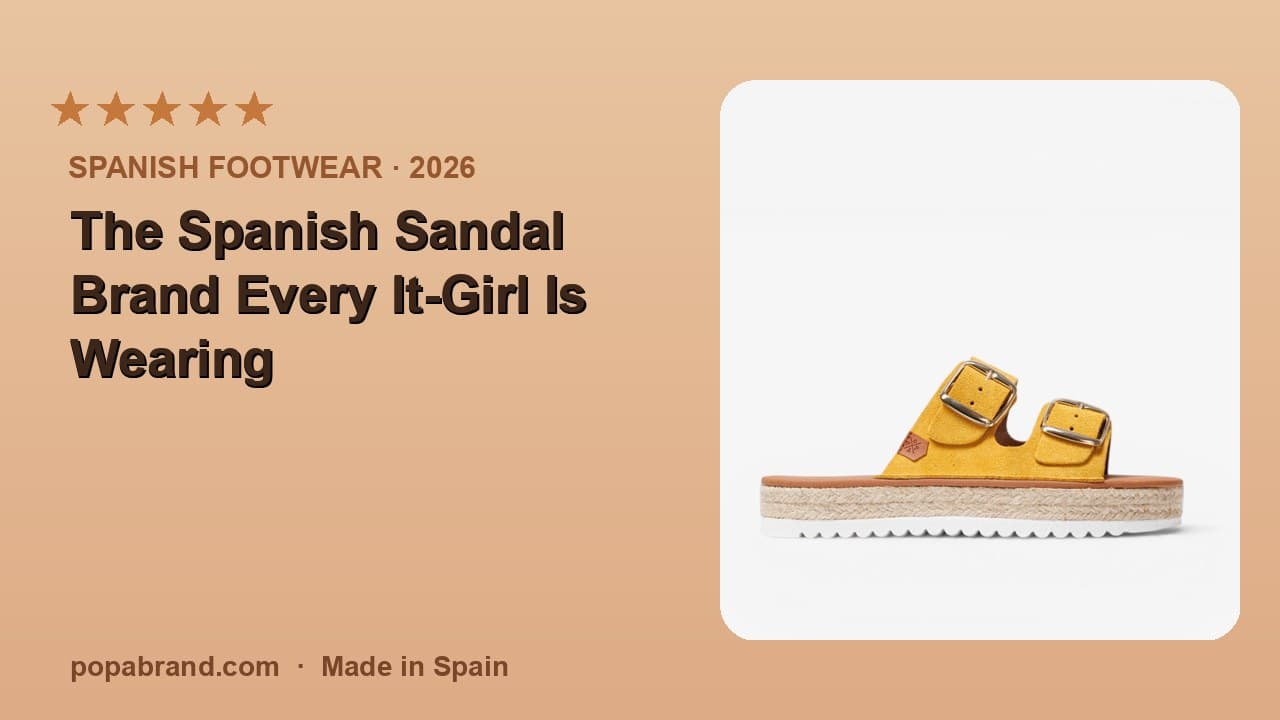
Why Spanish Sandals Became the It-Girl Summer Staple
- Why Spanish Sandals Became the It-Girl Summer Staple
- What Makes POPA Different from Fast-Fashion Sandals
- The Spanish Sandals Women Are Actually Buying in 2026
- The Heritage Behind the Menorquina
- POPA vs Zara vs Other Spanish Brands
- How to Style Spanish Sandals Like the It-Girls
- Sizing, Shipping and the Small Print
- Is POPA Worth It? The Honest Answer
- FAQ
If you have scrolled through any European summer feed this year, you have already seen them: the woven leather slides, the raffia platform menorquinas, the jute wedges photographed on a sun-bleached terrace somewhere in Mallorca. The spanish sandals women are reaching for in 2026 are not coming from fast-fashion racks. They are coming from POPA — a Spanish footwear house with stores in Madrid, Barcelona, Sevilla and Valencia, and more than 4,900 customer reviews behind it.
This is the brand quietly replacing the disposable summer sandal. Not because it shouts louder than Zara, but because it does the opposite: artisan finishing, real leather and natural fibres, and shoes built to come back out of the closet every June for years. Below is why POPA became the it-girl pick, what to buy, and how to wear it.
Why Spanish Sandals Became the It-Girl Summer Staple
There is a reason the fashion crowd shifted toward Spain for footwear. Spanish sandal-making is a centuries-old craft — the menorquina (the traditional flat sandal from the island of Menorca) and the alpargata (the jute-soled espadrille) are heritage designs, not seasonal trends invented by a marketing team.
POPA leans into that heritage with an editorial identity built around three worlds it calls THE VILLAGE, THE HOUSE and THE COAST — a nostalgia-soaked Mediterranean lifestyle rather than a logo. The result feels less like a shoe purchase and more like buying into a slower, sunnier way of dressing. That is exactly the energy the it-girl wardrobe wants in 2026: quiet, tactile, made somewhere with a story.
The practical part matters too. These are spanish sandals women can actually walk in all day. Comfort and an artisanal finish — “cómodas, elegantes y con acabado artesanal” — are the brand’s whole pitch, and the review volume backs it up.
What Makes POPA Different from Fast-Fashion Sandals
Put a POPA menorquina next to a €25 high-street lookalike and the gap is obvious within a wear or two.
- Real materials. Leather, suede, jute, raffia and crochet — natural fibres that age well, breathe in heat, and mould to your foot instead of rubbing it raw.
- Artisan construction. Stitched-and-cemented soles rather than glued-on foam that peels by August.
- Designed in Spain, sold across Spain. Physical stores in four major cities mean the fit and quality are held to a returnable, try-it-on standard.
- A range, not a single trend. Flats, platforms, heeled wedges and slides — so the aesthetic carries from a beach walk to dinner.
Fast fashion sells you a sandal for one summer. POPA sells you one you re-wear, which is both the more stylish and the more sustainable move.
The Spanish Sandals Women Are Actually Buying in 2026
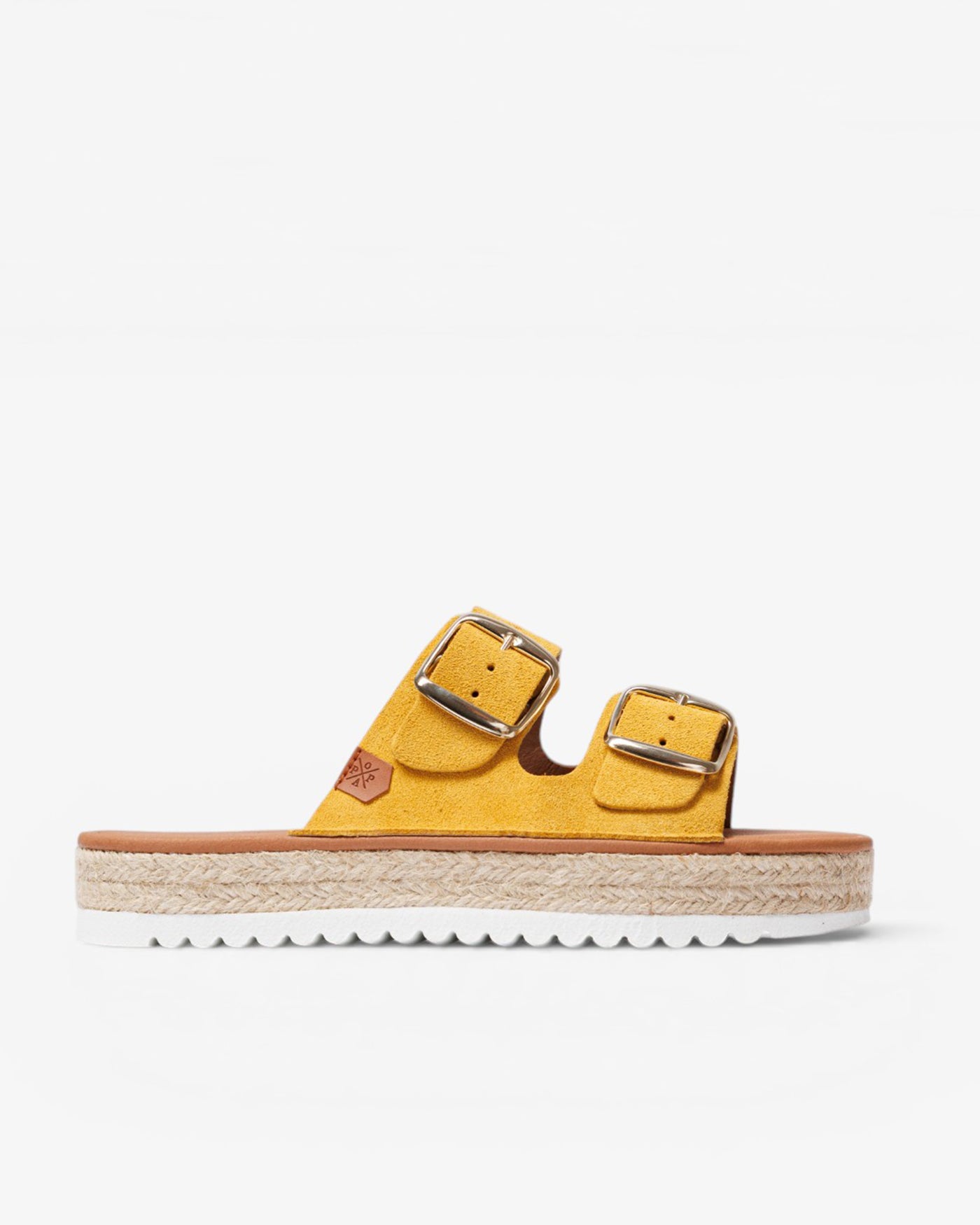
Here are the styles driving the buzz, with real names and prices from the current collection.
Menorquina Plataforma Morell (around €79.95)
The platform menorquina is the breakout shape of the year. The Morell Serraje in suede — available in ocre, arena, malva and aguamarina — pairs the traditional Menorcan silhouette with a chunky jute-edged platform. It is the single most photographed POPA style, and the colour range is what makes it collectible.
Sandalia Daira (around €99.95)
For something dressier, the Daira is a strappy sandal offered in raffia natural and in laminado oro “Galaxy.” It reads elegant enough for a wedding-guest look but is still flat and walkable — the rare evening sandal that does not punish you by the end of the night.
Cuña Arambol Yute (around €85.00)
The jute wedge is the espadrille’s grown-up cousin. The Arambol in yute gives you height and a strong leg line while keeping the natural-fibre, Mediterranean texture that defines the brand. A workhorse for anyone who wants lift without a stiletto.
Cuña Tacón Monsul (around €71.96)
A buckled suede heeled wedge — the most “city” option in the line-up, and proof POPA is not only a beach brand. It is the style that takes you from the village square to a tapas bar without a shoe change.
The Heritage Behind the Menorquina
To understand why these sandals feel different, it helps to know where they come from. The menorquina — sometimes called the “avarca” — originated on the island of Menorca as a farmer’s shoe: a flat, durable leather sandal with a closed heel and a simple front strap, built to handle rough island terrain. The traditional sole was even cut from recycled tyres for grip.
POPA takes that working-class heritage shape and refines it — better leathers, a wider colour range, and the now-signature jute-edged platform — without losing the original’s simplicity. That is the difference between a trend and a craft: the menorquina was a good shoe for a hundred years before it became fashionable, and it will be one after the trend cycle moves on. When you buy spanish sandals women have worn for generations, you are buying into durability that was engineered in long before Instagram existed.
POPA vs Zara vs Other Spanish Brands
Spain has more than one footwear name, so where does POPA actually sit?
- vs Zara / Mango (fast fashion): Zara will give you a menorquina-look sandal for €25–€35, but in synthetic materials with a glued sole. It photographs fine and lasts one summer. POPA costs 2–3× more and lasts several. If you only want the look for one season, Zara is the rational buy; if you want the shoe, POPA wins outright.
- vs heritage avarca makers (Ria, Pons): Traditional Menorcan brands make excellent flat avarcas, often at a similar price. POPA’s edge is range and trend-awareness — the platform shapes, the wedges, the dressier Daira, and the matching raffia bags — so you can build a whole summer wardrobe from one house rather than only buying the classic flat.
- vs luxury (Hermès Oran, designer slides): Luxury slides start at €600+. POPA gives you 80% of the material quality and a comparable artisan finish at a seventh of the price. For most buyers that is the smarter tier entirely.
The takeaway: POPA occupies the sweet spot — more shoe than fast fashion, more range than the purist heritage makers, and a fraction of luxury pricing.
How to Style Spanish Sandals Like the It-Girls
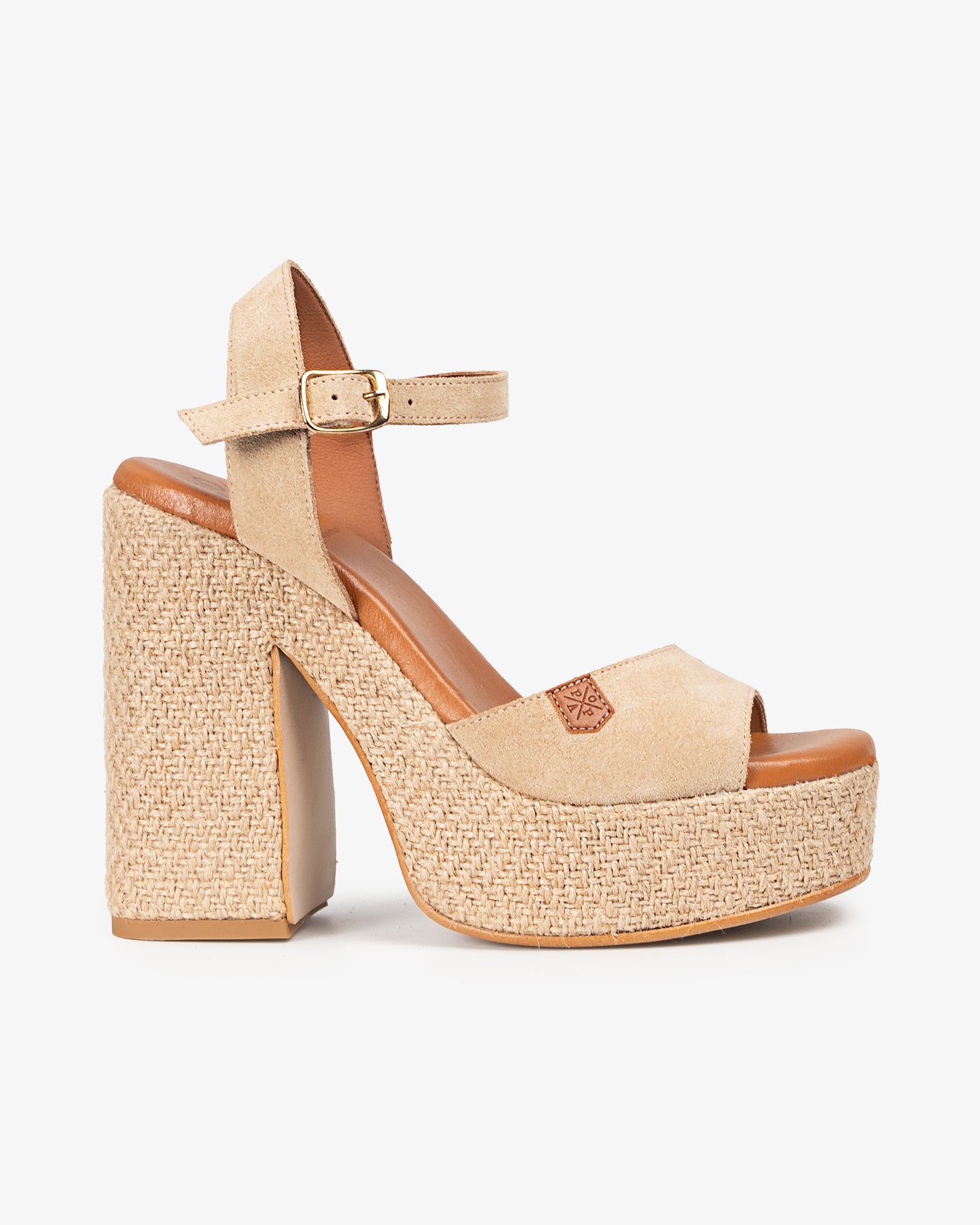
The whole point of these shoes is effortlessness, so the styling rule is restraint:
- Linen and raffia, head to toe. A linen midi dress with the Morell platform menorquina is the uniform. Let the texture do the work.
- Wide-leg denim + leather slide. The most repeatable off-duty look — slightly cropped jeans so the sandal shows.
- Neutral on neutral. POPA’s palette (arena, beige, ocre, mushroom) is built to disappear into a tonal outfit. Match the sandal to the bag — the brand’s raffia bolsos are made for exactly this.
- One colour pop. If you want the look to feel 2026 rather than timeless, take the menorquina in aguamarina or malva and keep everything else sand-coloured.
For the full head-to-toe approach — not just the shoe — see our guide on how to pull off effortless Mediterranean summer style.
Sizing, Shipping and the Small Print
A few practical notes before you buy. POPA ships across Europe and runs periodic promotions — at the time of writing, a “5FORYOU” code gave €5 off plus free shipping in Spain, France and Portugal. Because the brand operates physical stores in four Spanish cities, returns and exchanges are handled to a high-street standard rather than the slow drop-ship process you get from anonymous online-only sellers.
On sizing, the platform menorquinas and wedges run true to size, with a slight lean toward sizing down if you are between numbers, since the leather relaxes. The strappy Daira and the flat slides are true to size with no adjustment needed. If in doubt, the brand’s review pages (4,900+ and counting) are unusually detailed about fit, so it is worth reading a handful for your specific style before checkout.
Is POPA Worth It? The Honest Answer
At €70–€100 a pair, POPA sits above fast fashion and below luxury — the “buy it for years” tier. If you replace a €25 sandal every summer, the maths evens out within two seasons, and you spend those seasons in something far more comfortable and better-looking.
We put the brand through a full month of real wear to test the comfort and durability claims. The detailed verdict is in our 30-day POPA brand review.
FAQ
Are POPA sandals true to size?
Most styles run true to size, and with stores across Spain the brand is set up for easy exchanges. If you are between sizes in a platform menorquina, sizing down tends to give a cleaner fit.
Where are POPA sandals made?
POPA is a Spanish brand (“Marca Española”) that draws on traditional Spanish sandal craft — the menorquina and alpargata — with physical stores in Madrid, Barcelona, Sevilla and Valencia.
What are the most popular POPA styles for women?
The Menorquina Plataforma Morell (suede platform, ~€79.95), the Sandalia Daira (~€99.95) and the Cuña Arambol jute wedge (~€85.00) are the standout sellers in 2026.
Are Spanish sandals good for wide feet?
Natural materials like leather and suede soften and mould with wear, so menorquinas and slides tend to be more forgiving for wider feet than synthetic fast-fashion sandals.
Is POPA better than Zara for sandals?
For longevity and comfort, yes. Zara wins on price for a single season; POPA wins on materials, artisan construction and re-wearability over several summers.
Ready to find your pair? Explore the current collection at POPA and start with the platform menorquina — it is the one everyone is wearing.
Recommended for you
 Electric Wheelchair Cost, Insurance & Financing: What to Really Expect (2026)
 Foldable Electric Wheelchair Maintenance: Folding, Charging & Care (2026)
 How to Travel by Plane With an Electric Wheelchair (2026 Guide)
 Power Wheelchair vs Mobility Scooter: Which Is Right for You? (2026)
 Kerdom Wheelchair Comparison: DX04 vs DX07 vs DX08 (2026)
 Kerdom DX05 Review: The 400 lb All-Terrain Folding Power Chair (2026)