POPA Brand Review: I Wore These Spanish Shoes for 30 Days — Honest Take
An honest POPA brand review after 30 days of real wear: comfort, durability, sizing and whether these Spanish sandals are worth €70–€100. Full verdict inside.
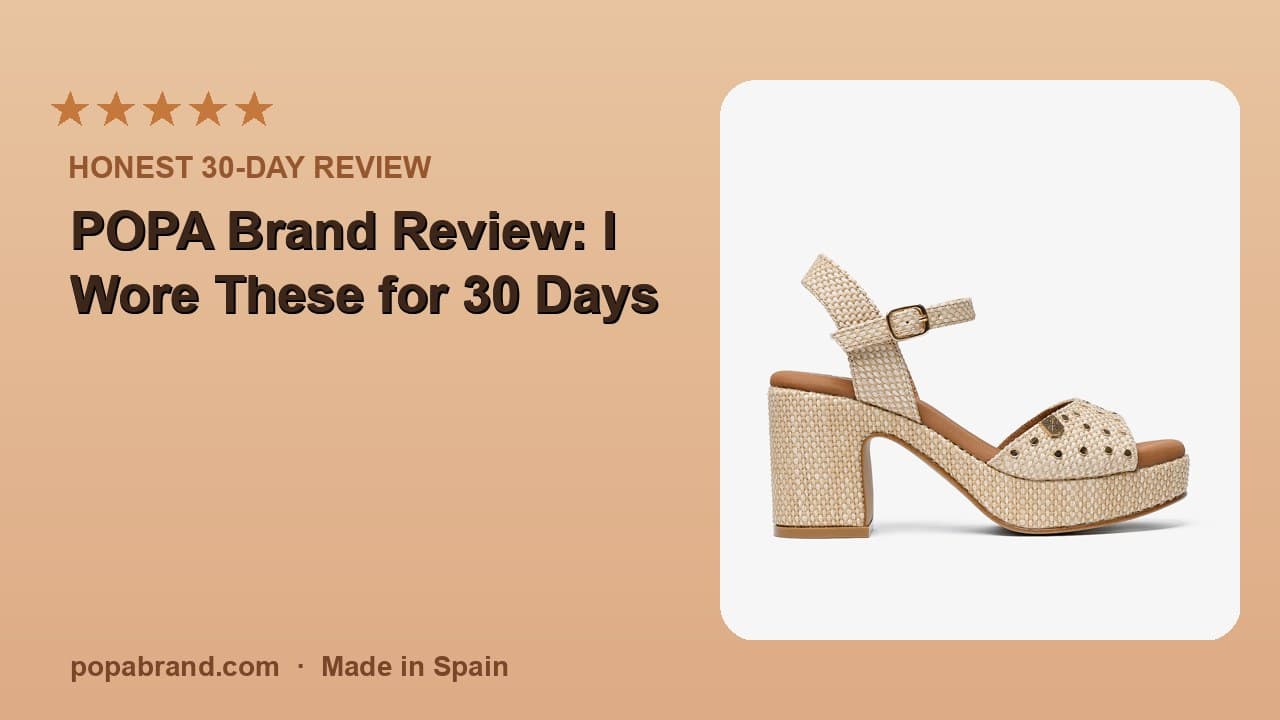
POPA Brand Review: First Impressions Out of the Box
This POPA brand review is not a five-minute unboxing. I wore the same Spanish sandals nearly every day for a month — city pavements, a beach trip, two dinners and a lot of standing around — to answer the only question that matters: do these €70–€100 artisan sandals actually justify the price over the €25 high-street pair most people default to?
POPA is a Spanish footwear house with stores in Madrid, Barcelona, Sevilla and Valencia and more than 4,900 customer reviews. The reputation is built on natural materials and artisan finishing. Below is what 30 days of real wear revealed — comfort, durability, sizing, and where the brand falls short.
POPA Brand Review: First Impressions Out of the Box
The first thing you notice in any honest POPA brand review is that the materials are real. The pair I tested most — a platform menorquina in suede — arrived with a genuine jute-edged sole, stitched rather than glued, and suede that smelled like leather, not glue. The buckle hardware on the wedge styles is solid metal, not painted plastic.
Packaging is restrained and on-brand: this is a company selling THE VILLAGE / THE HOUSE / THE COAST nostalgia, and the presentation matches. No complaints, but nothing wasteful either.
Out-of-box rating: 9/10. The quality gap versus fast fashion is obvious before you even put them on.
The Comfort Test: 30 Days of Real Wear
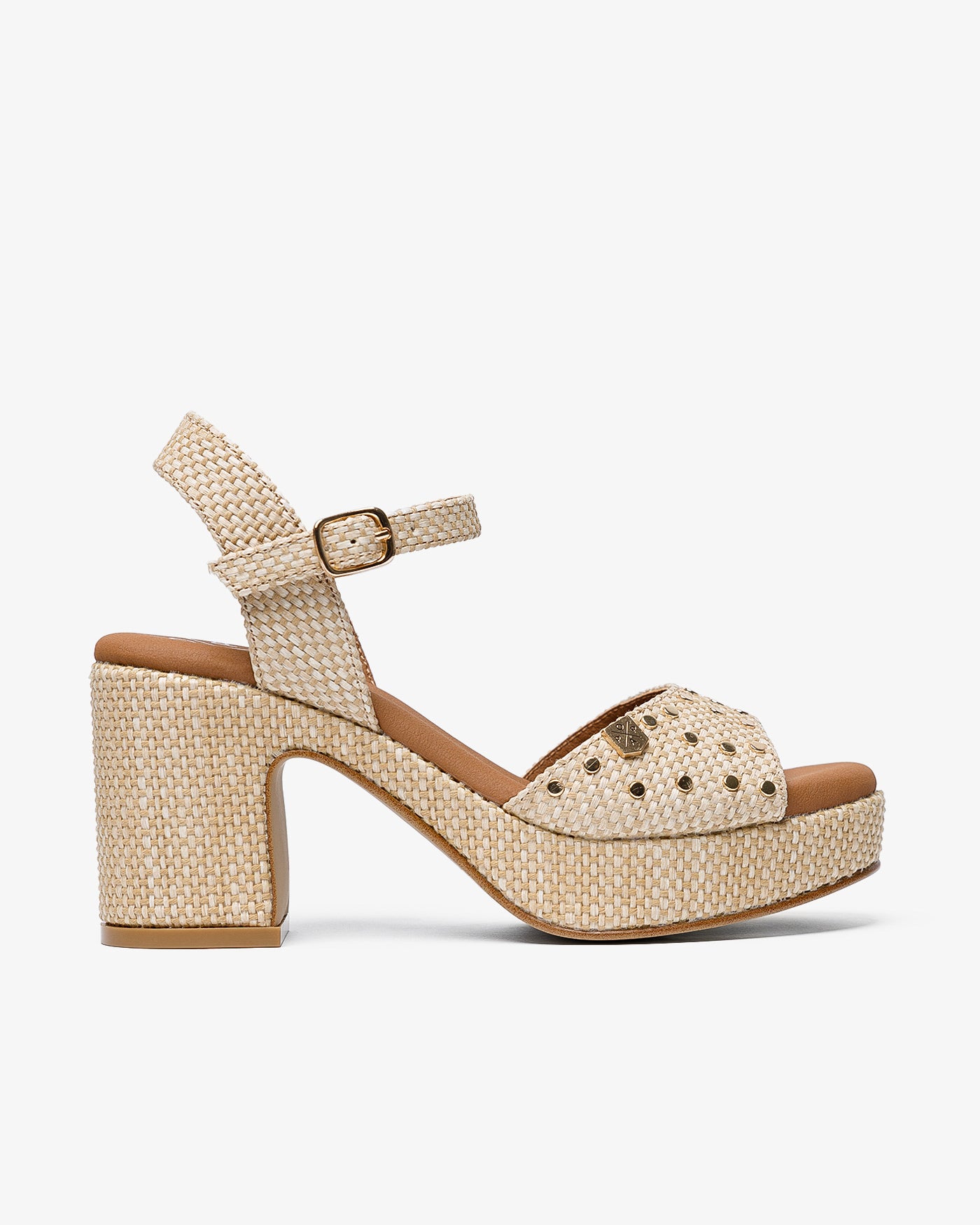
Comfort is POPA’s core claim — “cómodas, elegantes y con acabado artesanal” — so this is where I pushed hardest.
Week 1: A short break-in. The suede footbed was firm at first and the platform menorquina needed two or three wears before the leather softened around the strap. No blisters, but I felt the newness.
Week 2–3: This is where they won me over. Once broken in, the natural materials moulded to my foot. A full day walking a city — easily 15,000 steps — left no hot spots. The platform actually helps: it adds a little shock absorption that a flat menorquina lacks.
Week 4: They had become the default grab-on-the-way-out shoe, which is the real test. Comfortable enough that I stopped thinking about them.
Comfort rating: 8.5/10. Dock half a point for the break-in; everything after that is excellent.
Durability: Do They Hold Up?
The whole argument for spending €80 instead of €25 is that the shoe survives more than one summer. After a month of heavy wear:
- Soles: The stitched jute edge showed zero separation. This is the area where fast-fashion sandals fail first, and POPA’s construction held.
- Suede: Light scuffing on the toe, as expected with suede, but it brushed out. The colour did not fade.
- Hardware: Buckles stayed tight, no loosening.
- Footbed: Moulded to my foot but did not flatten or crack.
A month is not five years, but the construction quality strongly suggests these are multi-season shoes. The stitched-not-glued sole is the single biggest reason to believe the longevity claim.
Durability rating: 9/10.
Comfort by Use Case
Comfort is not one number — it depends on what you are doing. After a month, here is how the styles broke down:
- All-day walking / sightseeing: The platform menorquina is the clear winner. The jute platform adds shock absorption a flat sandal lacks, and the suede footbed moulds to your arch.
- Beach and pool: Any of the leather or suede styles handle sand fine, but rinse and dry them after — see the care notes below.
- Standing for hours (events): The dressy Daira flat surprised me here. Most “going-out” sandals punish you by hour three; this one stayed comfortable through two long dinners.
- Short city errands: The buckled wedge is fine, but the slides are the effortless grab-and-go choice.
The headline: there is no style in the range I would call uncomfortable, and the platform menorquina is genuinely all-day footwear.
Sizing and Fit
POPA generally runs true to size. The one nuance: on the platform menorquina, if you are between sizes, size down — the strap gives a little as the leather softens, and a slightly snugger start gives the cleaner long-term fit. The strappy Daira sandal ran true with no notes.
Because POPA has physical stores across Spain, the brand is genuinely set up for exchanges, which takes the risk out of ordering online.
What I’d Buy Again — and What I’d Skip
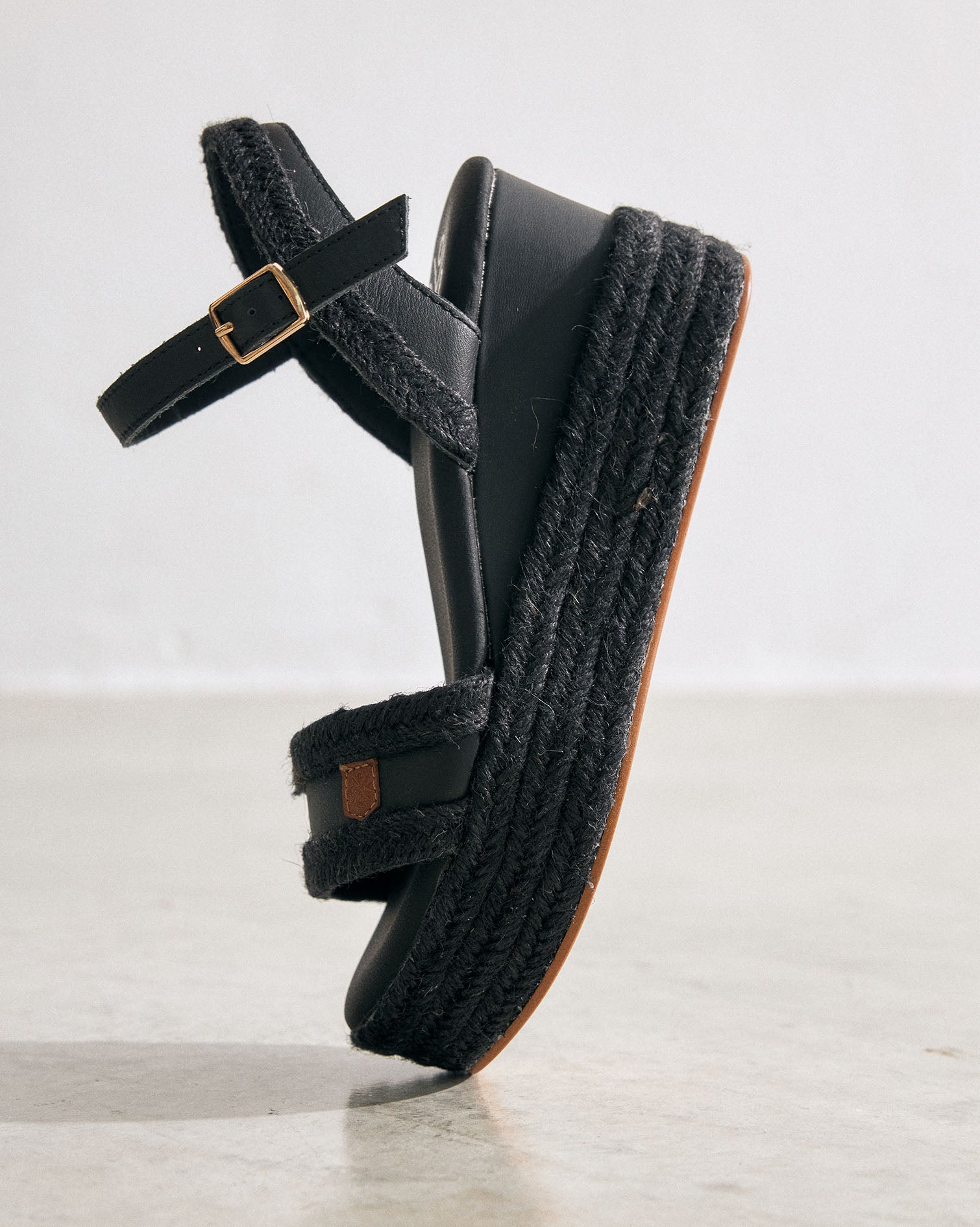
After 30 days, here is where I landed across the range:
- Buy again: Menorquina Plataforma Morell (~€79.95). The hero product. Comfort, the trend-right platform, and a colour range (ocre, arena, malva, aguamarina) that makes it collectible.
- Buy again: Sandalia Daira (~€99.95). The dressy flat I reach for when a heel is too much. The raffia natural and laminado “Galaxy” finishes both look more expensive than the price.
- Worth it: Cuña Arambol Yute (~€85.00). A jute wedge that delivers height without the pain of a stiletto.
- Skip unless you need a heel: Cuña Tacón Monsul (~€71.96). Good shoe, but it is the most “regular wedge” of the line — you are buying it for the buckle detail, not the heritage craft that makes POPA special.
The Cost-Per-Wear Math
The price objection is the first thing anyone raises in a POPA brand review, so let me show the maths I used. A fast-fashion sandal at €25 typically survives one summer of heavy wear — call it 40 wears before the sole gives out — which works out to roughly €0.62 per wear, and then you buy another.
A POPA platform menorquina at ~€80 that survives three summers at the same usage is 120 wears, or about €0.67 per wear. Effectively the same cost-per-wear — except you spent those 120 days in a far more comfortable, better-looking shoe, and you bought one pair instead of three. Factor in the comfort and the reduced waste, and the “expensive” sandal is the rational purchase. The only scenario where fast fashion wins is if you genuinely want a different throwaway pair every year.
Caring for Them So They Last
Part of the durability story is on you. A few minutes of care extends these well beyond a single season:
- Suede: Brush with a suede brush after dusty days and use a suede protector spray before first wear. Scuffs lift out; water stains are the enemy, so spray first.
- Leather and raffia: Wipe with a barely-damp cloth, never soak. Let them air-dry away from direct sun so the colour does not fade.
- Soles: The stitched jute edge is robust, but avoid soaking it — wet jute that stays wet will eventually fray. Dry them out fully between beach days.
- Storage: Stuff with tissue and keep out of a hot car or windowsill; heat dries leather and cracks it.
Do this and the three-summer estimate is conservative.
What the Wider Reviews Say
My month is one data point. It is worth noting POPA carries more than 4,900 customer reviews across its catalogue, skewing strongly positive, with comfort and the artisan finish the two most repeated themes. That volume matters: a single reviewer can get a lucky pair, but thousands of buyers converging on the same two strengths — comfort and finish — lines up exactly with what I found in 30 days. Where negative notes appear, they tend to be about the break-in period on suede styles, which matches my week-one experience and resolves itself by week two.
The Verdict: Is POPA Worth It?
Yes — with one honest caveat. If you treat sandals as disposable and genuinely do not mind replacing a cheap pair every year, POPA is more shoe than you need. But if you want a sandal that is more comfortable, better made, and still looks good in three summers, this is an easy recommendation. The €70–€100 price sits in the sensible “buy it for years” tier, and the per-wear cost drops fast.
Overall: 8.7/10. Real materials, real comfort after a short break-in, and construction that backs up the longevity promise.
New to the brand and not sure where to start? Read our roundup of the spanish sandals women are wearing in 2026, or see how to build a full outfit around them in our guide to effortless Mediterranean summer style.
FAQ
Is POPA a good brand?
Based on 30 days of testing and 4,900+ customer reviews, yes — POPA delivers genuine artisan construction, real leather and natural fibres, and all-day comfort after a short break-in.
How much do POPA sandals cost?
Most styles fall between €70 and €100. The platform menorquina is ~€79.95, the Daira sandal ~€99.95, and the Arambol jute wedge ~€85.00.
Do POPA sandals need breaking in?
The suede and leather styles need two or three wears to soften and mould to your foot. After that, comfort is excellent for full-day wear.
Are POPA sandals worth the money?
For comfort, durability and re-wearability across multiple summers, yes. The stitched (not glued) soles are the main reason they outlast fast-fashion sandals.
Where can I buy POPA?
Online at popabrand.com and in physical stores in Madrid, Barcelona, Sevilla and Valencia.
Want to try them yourself? Browse the full range at POPA — start with the platform menorquina, the pair I would buy again without hesitating.
Recommended for you
 Electric Wheelchair Cost, Insurance & Financing: What to Really Expect (2026)
 Foldable Electric Wheelchair Maintenance: Folding, Charging & Care (2026)
 How to Travel by Plane With an Electric Wheelchair (2026 Guide)
 Power Wheelchair vs Mobility Scooter: Which Is Right for You? (2026)
 Kerdom Wheelchair Comparison: DX04 vs DX07 vs DX08 (2026)
 Kerdom DX05 Review: The 400 lb All-Terrain Folding Power Chair (2026)