How to Choose Yoga Pants That Won’t Show Through: 2026 Buyer’s Guide
Learn exactly how to choose yoga pants that won’t show through, lose shape, or dig in — the 5 tests every pair must pass plus top budget pick for 2026.

Why Most Yoga Pants Fail the Opacity Test
If you have ever ended a yoga class, looked down, and realized your leggings were significantly more transparent than you thought when you put them on that morning, you are not alone. The combination of studio lighting, a forward fold, and fabric that looked completely fine in the bathroom mirror is one of the most common activewear disappointments — and one of the most preventable.
Knowing how to choose yoga pants that will not betray you in class is not complicated once you know what to test for. This guide covers the five criteria that actually separate reliable yoga pants from beautiful-looking ones that fail when you use them, plus specific guidance for matching fabric and design to your yoga style and body type.
Why Most Yoga Pants Fail the Opacity Test
The problem is not purely about fabric thickness. Many leggings that feel substantial at the waistband become transparent when the fabric is under tension — stretched across the seat, the thighs, or the back of the knee. A legging that is opaque when you hold it up to the light in the store is not necessarily opaque when it is stretched to fit your body during downward dog.
The failure mode is usually one of two things: a fabric that is too thin (high stretch but low weight), or a fabric with too high a spandex ratio that, when stretched, allows light to pass through the nylon. Both can look fine at rest.
The only reliable test is the flashlight test described below — checking the fabric under tension, not just at rest.
The 5 Tests Every Pair Must Pass
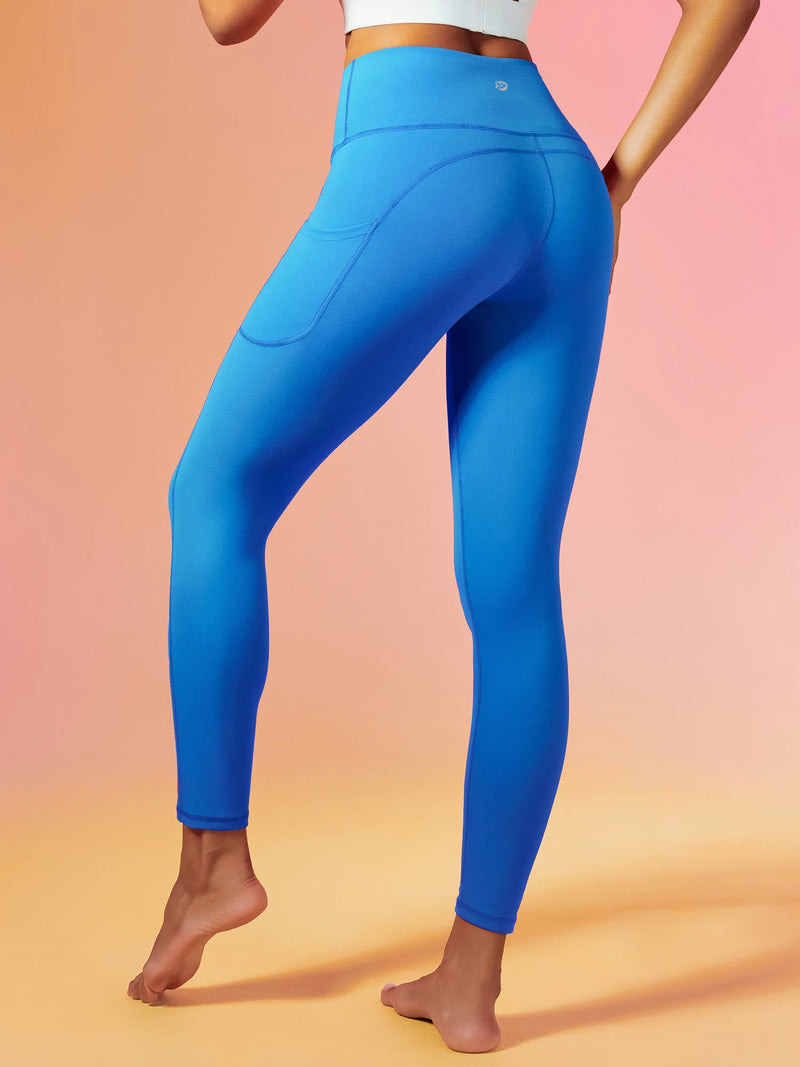
Run these five checks before buying any yoga pants, whether in-store or at home after delivery. If a pair fails one, it will likely become a drawer-dweller within a month.
Test 1: The Flashlight Test (Opacity Under Tension)
Put the leggings on. Have someone hold a phone flashlight directly against the fabric from the outside at the seat and thighs — the areas under the most tension during a squat or forward fold. Check from the inside: you should not be able to see the light source through the fabric.
Alternatively, hold the waistband open wide enough to simulate a stretched fit and hold it up to a bright overhead light. If you can read text through the stretched fabric, they will be see-through on the most-stretched parts of your body.
IUGA’s ButterLab and FlexTight lines are built around passing this test. The double-knit construction ensures opacity even when the fabric is under full stretch.
Test 2: The Waistband Fold Test
Stand in front of a mirror wearing the leggings. Raise one knee to hip height and hold it. Check whether the waistband folds, rolls, or dips at the front or sides. A waistband that moves with this basic test will be repositioning itself constantly during your class.
A wide, flat, seam-free waistband (at least 7 cm) made of denser fabric than the leg panel is less prone to rolling. Narrow waistbands, drawstring waistbands, and waistbands with a thin elastic channel along the top edge are the most likely to migrate.
Test 3: The Knee Bag Test
Sit in a chair for two to three minutes. Stand up and check the back of the knees: are there any wrinkles or gathered fabric? Fabric that bags at the knee after a few minutes of sitting has poor elastic recovery — it has already lost some of its stretch memory. After a full yoga class, it will look and feel worn out.
Pull the fabric at the knee to twice its length and release. It should snap back immediately with no visible slack.
Test 4: The Gusset Check
Turn the leggings inside out and look at the crotch seam. If there is a single seam running straight from the front waistband to the back waistband, that seam will migrate during movement — often toward the inner thigh, where it causes chafing. A properly engineered gusset (a diamond-shaped panel that distributes seam tension in four directions instead of two) eliminates this migration entirely.
No-front-seam designs — where the central seam is moved to the side panels — solve the problem from the front entirely. IUGA uses no-front-seam construction across most of its line specifically to eliminate inner-thigh rubbing.
Test 5: The Squat Check
Do a full squat or a low lunge with the leggings on. The waistband should not dig into the lower abdomen. The fabric across the thighs and seat should feel like it is moving with you, not resisting. You should be able to feel the stretch without being aware of any pressure points at the seams.
If the fabric resists movement at the hip crease, it is either the wrong size or the wrong style for your flexibility range.
Choosing Yoga Pants by Practice Type
Now the specifics: how to match these criteria to your yoga style.
For Hot Yoga and Bikram
Hot yoga increases the visibility problem: sweat saturation makes even opaque fabric more transparent. Prioritize:
– Higher fabric weight (not thinner, not more “breathable”)
– Lighter colorways — dark colors show wet patches less, but medium tones become see-through when wet
– No cotton blend (cotton holds moisture and becomes heavy and clingy)
IUGA’s SilkFeel is the lightest fabric in the line and works well in heated environments. The ButterLab is slightly heavier and stays more opaque when wet.
For Power Yoga and Vinyasa
Fast-paced styles require full range of motion without fabric restriction. The key criteria are seam routing (no inner-thigh seams), waistband stability, and stretch recovery.
The IUGA ButterLab covers all three. The PowerTight adds compression if you prefer a firmer feel during active sequences.
For Restorative and Yin Yoga
Slow, passive yoga involves long holds in floor poses. Comfort is the primary variable — the fabric against the skin matters more than compression or structure. A softer fabric (ButterLab, SilkFeel) is preferable to a firmer compression style (PowerTight).
For Pilates and Barre
These disciplines involve precise, small movements and often include prone positions where the back of the leggings is visible. Opacity matters as much as it does in yoga. Tummy control is often a secondary priority, which makes the FlexTight Tummy Control a natural fit.
How to Choose Yoga Pants by Body Type
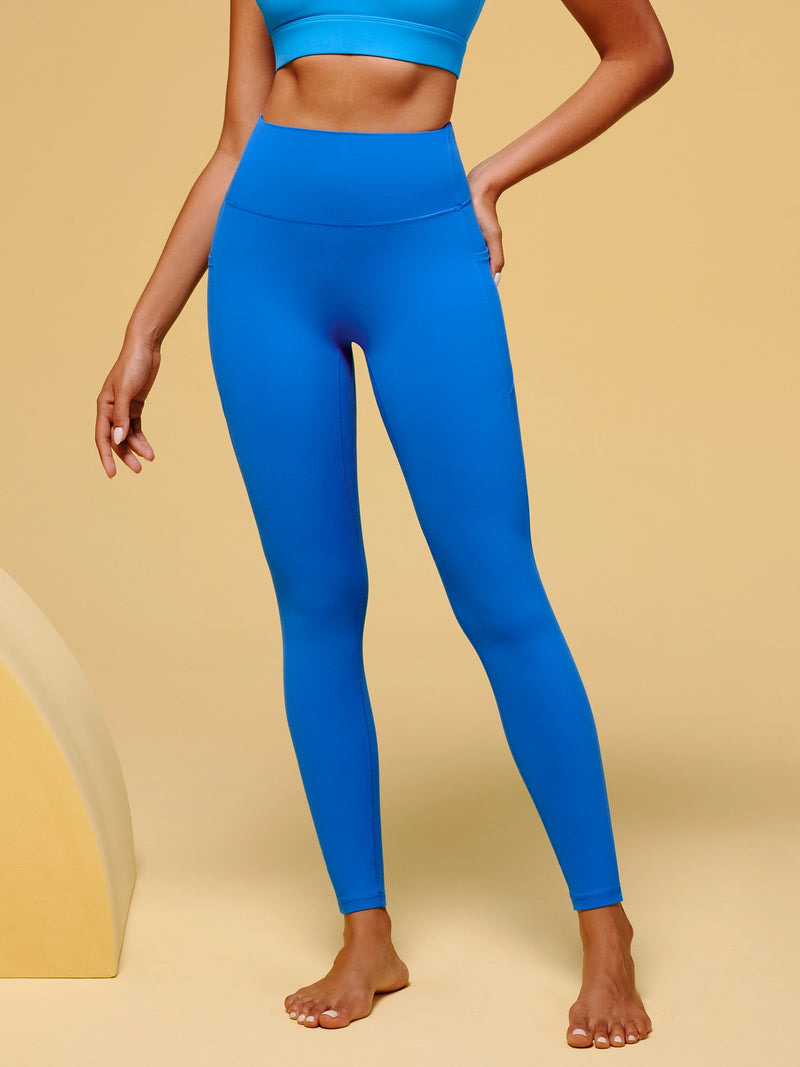
There is no single pair that works best for every body, but the following guidelines resolve most fit issues.
Shorter torso: The high-rise waistband on most yoga pants sits at or above the navel. For a shorter torso, this can feel like the waistband is sitting at the ribs. The ButterLab’s wide, soft waistband is the most comfortable in this case — its flexibility means it does not press as firmly as a compression waistband.
Longer torso: A high-rise waistband may sit below the navel rather than above it. This is purely aesthetic — it does not affect function. Sizing up in the waist resolves it.
Curvy hip-to-waist ratio: The most common fit challenge for a curvy hip-to-waist ratio is choosing between waistband comfort (size up) and hip/seat fit (true to size or down). The ButterLab’s soft waistband tolerates sizing up better than compression styles — going one size up does not create significant looseness in the leg because the fabric self-adjusts.
Athletic/straight build: Compression styles (PowerTight) tend to work better for athletic builds because the compression-to-fit ratio is more predictable. The ButterLab is equally fine — the lack of compression just means the fit is more relaxed.
Petite height: The 7/8 length (25″ inseam) typically hits at the mid-calf on petite wearers (under 5’3″), which is the intended fit. The full-length (28″ inseam) may need to be rolled at the ankle. Check the inseam chart against your own measurement before ordering.
Price vs Quality: What to Expect at Different Tiers
Under $30 (budget): IUGA ButterLab, FlexTight, SilkFeel. Genuine performance fabric, proper seam construction, passes all five tests. Limited brand cachet.
$40-$70 (mid-tier): Gym Shark, Athleta, Varley. More colorways and style variety. Minor quality edge in some styles. Brand cachet starting to matter. Not significantly better on the five test criteria than IUGA.
$80-$130 (premium): Lululemon Align, Alo Airlift. Marginally better fabric weight and drape in the top styles. Brand prestige. Studio culture currency. Meaningful price premium for marginal functional gain.
The honest summary: how to choose yoga pants by price is to choose the tier that matches your functional requirements and budget rather than to chase a brand. At $29.99, IUGA’s ButterLab passes every practical test the Lululemon Align passes.
Caring for Your Yoga Pants
The biggest determinant of how long any yoga pants last is not the price — it is the wash routine.
- Cold water wash, always (heat degrades spandex)
- Inside out to protect the outer surface
- No fabric softener (coats fibers, reduces stretch and moisture wicking)
- Air dry flat (even low heat shortens the elastic lifespan)
With this routine, a $30 pair of IUGA leggings will outlast a $100 pair that goes in the dryer regularly.
The Bottom Line
Knowing how to choose yoga pants comes down to five simple tests: flashlight test, waistband fold test, knee bag test, gusset check, and squat check. Any pair that passes all five will perform well in class. Any pair that fails even one will become a problem.
The IUGA ButterLab passes all five at $29.99. Use the code YOGA15 at checkout to get three pairs for 15% off, or YOGA20 for five pairs.
For more on the full IUGA range, read our IUGA ButterLab leggings review and our best yoga leggings under $30 roundup.
Recommended for you
 Electric Wheelchair Cost, Insurance & Financing: What to Really Expect (2026)
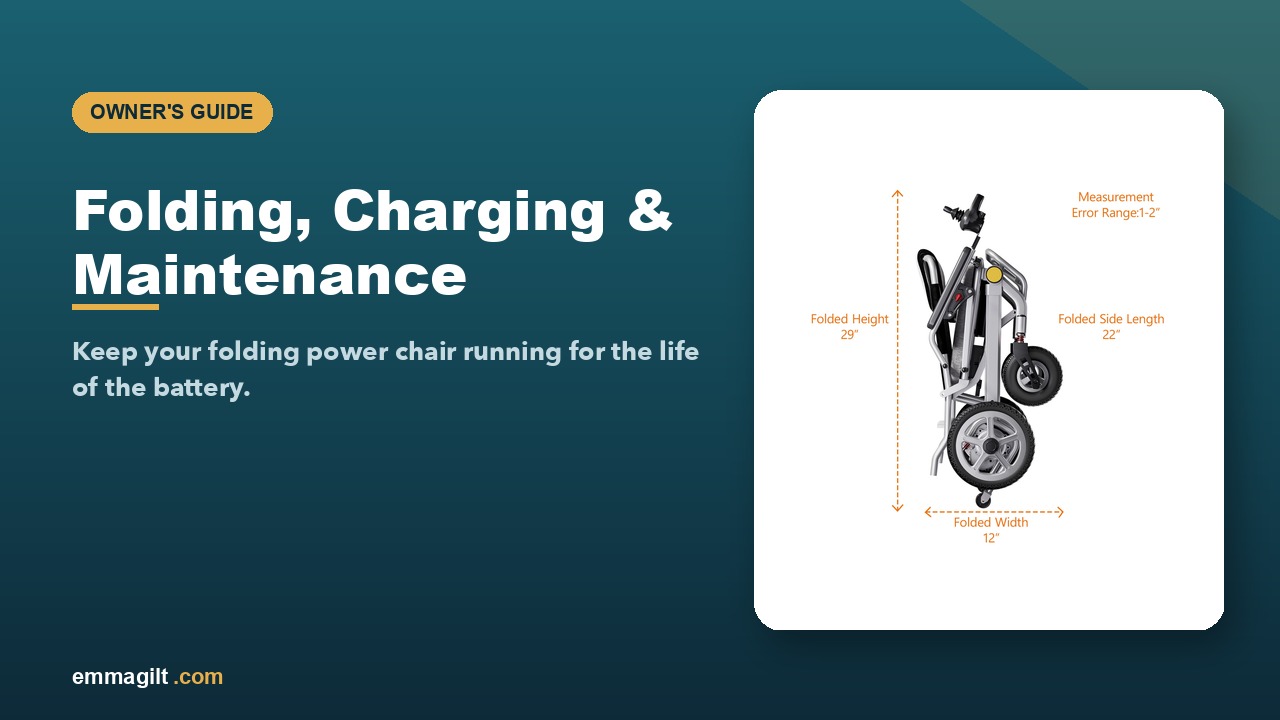 Foldable Electric Wheelchair Maintenance: Folding, Charging & Care (2026)
 How to Travel by Plane With an Electric Wheelchair (2026 Guide)
 Power Wheelchair vs Mobility Scooter: Which Is Right for You? (2026)
 Kerdom Wheelchair Comparison: DX04 vs DX07 vs DX08 (2026)
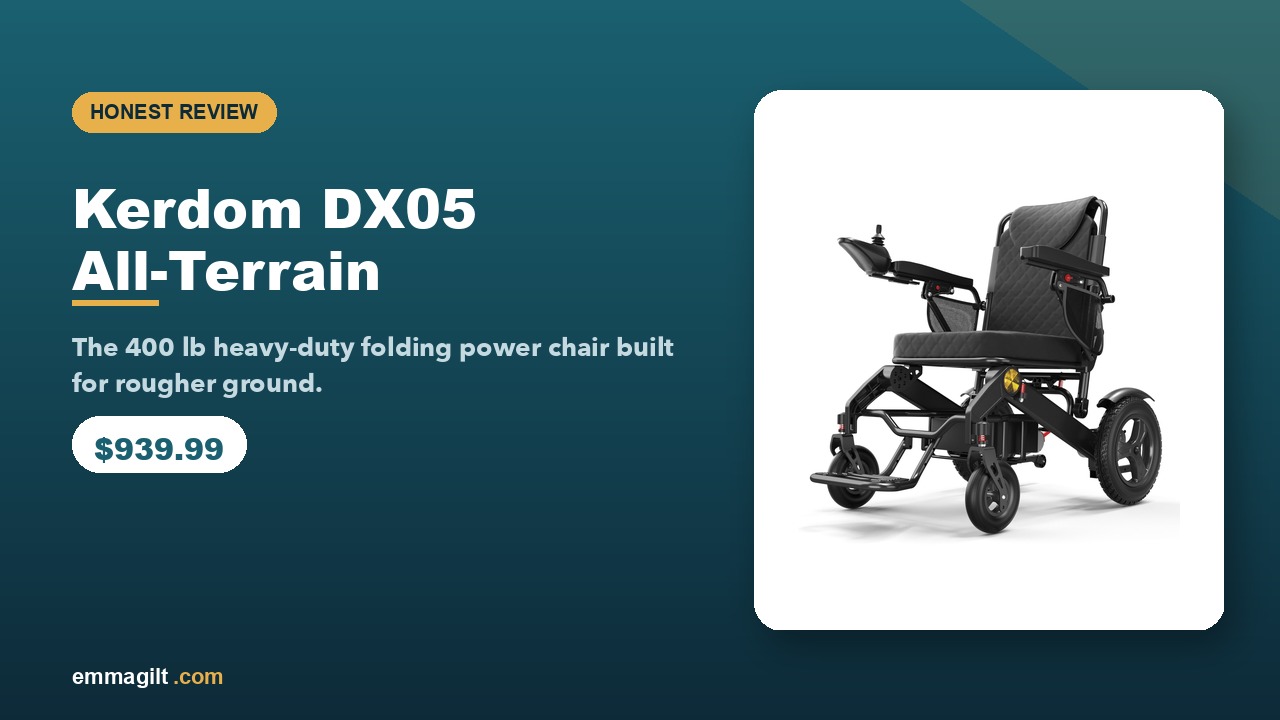 Kerdom DX05 Review: The 400 lb All-Terrain Folding Power Chair (2026)