How to Choose a Moissanite Engagement Ring: Complete 2026 Buyer’s Guide
Learn how to choose a moissanite engagement ring — cut, color, clarity, setting style, metal, and size. Complete buyer’s guide with brand recommendations.
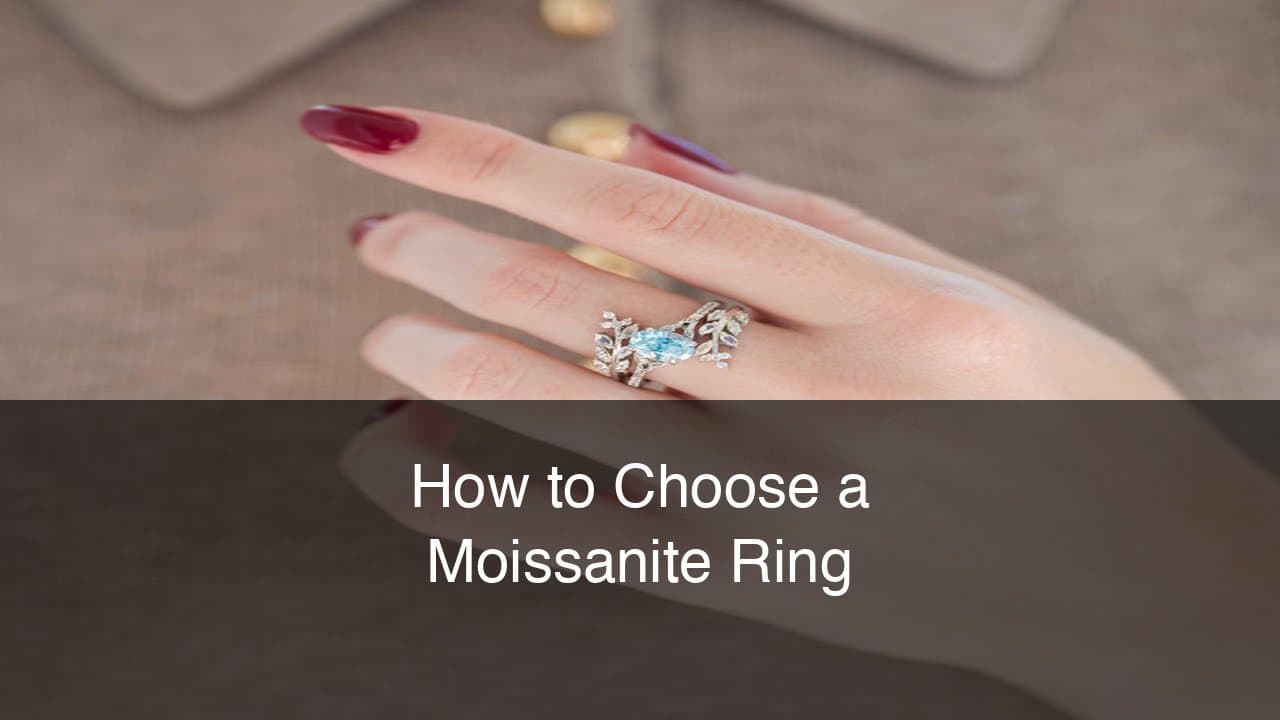
Start with Design Style, Not Stone Size
Knowing how to choose a moissanite engagement ring means understanding a different set of criteria than diamond ring shopping. Moissanite has its own quality grades, its own optical properties, and it suits certain design styles better than others. The process of choosing right is straightforward once you know what the variables actually mean.
This guide covers everything you need to make a confident moissanite ring purchase in 2026.
Start with Design Style, Not Stone Size
Most engagement ring guides tell you to start with stone size. This is wrong for moissanite rings, particularly for non-traditional designs.
Moissanite’s high fire (rainbow dispersion) means that the design context of the stone matters more than its carat weight. A 1-carat moissanite in a kite setting produces a completely different visual impression than a 1-carat moissanite in a round solitaire. The kite setting channels the fire into deliberate geometry; the round solitaire has less visual context and the dispersion can appear random.
Start by deciding your design category:
- Traditional solitaire: Round, oval, or cushion center stone on a plain band. If this is your preference, moissanite in a round or oval cut with VS clarity in white/colorless grade is the selection.
- Fantasy/geometric: Kite, kite cluster, hexagon, coffin cut, or other angular shapes. If this is your preference, look at Aquamarise’s Skye Kite or Lovers of the Dark collections.
- Cluster/cosmic: Multiple small stones arranged in a pattern rather than a single center stone. Aquamarise’s Orion Nebula and Starry Night collections.
- Nature-inspired: Mixed gemstones (moss agate, moonstone, alexandrite) with moissanite as accent or center. Available in Aquamarise’s alternative gemstone line.
Once you know your design direction, stone and metal selection follows logically from it.
How to Choose Moissanite Quality: The 3 Criteria
1. Color Grade
Moissanite is graded on a color scale adapted from diamond grading:
- Colorless (D-E-F range): No visible color in normal lighting. The premium tier.
- Near-colorless (G-H-I range): Slight color visible only in direct comparison with colorless stones. Most buyers cannot distinguish near-colorless from colorless without side-by-side comparison.
- Faint/light (J-K and below): Visible warmth or tint under normal viewing.
For white or yellow gold settings, near-colorless moissanite (G-H-I) is the practical choice — the warm metal tone masks any faint warmth in the stone, and the price difference versus colorless is significant. For platinum or white gold settings where the metal is very white, colorless grade maintains the icy overall appearance.
Gray or salt-and-pepper moissanite is a separate category — intentionally colored stones with inclusions that create a muted, complex appearance. These are not “lower grade” colorless stones; they are a different aesthetic choice suited to moody or dark design styles.
2. Clarity Grade
Moissanite clarity grades:
– VVS: Very Very Slightly Included — inclusions invisible even under 10x magnification without expertise
– VS: Very Slightly Included — inclusions visible under 10x magnification, not to the naked eye
– SI: Slightly Included — inclusions visible under magnification and potentially visible to naked eye in some cuts
VS clarity is the practical recommendation for any ring that will be worn daily. Inclusions in VS grade are not visible during normal wear or in photographs at normal zoom. SI clarity can show inclusions visible to the eye in some cuts, particularly kite and emerald cuts that have larger facets and more direct views into the stone.
Aquamarise’s catalog uses moissanite in the VS grade range as standard. For their price points, this is the appropriate quality level.
3. Cut Quality
Cut refers to the faceting pattern and geometry of the stone — how it is shaped to interact with light. Moissanite is produced in several cuts:
Round brilliant: Optimizes total light return. The most common cut. In moissanite, the round brilliant produces intense sparkle but also intense fire that some buyers find overwhelming in isolated settings.
Oval: Elongated round variant that makes the stone appear larger per carat weight. Slightly less fire than round; the elongated silhouette is very wearable on different hand shapes.
Kite: Four-sided angular cut. Used in Aquamarise’s Skye collection. The angular facets create distinct light channels that showcase moissanite’s fire in a controlled pattern.
Emerald/cushion: Larger facets with step-cutting. More mirror-like than sparkly. In moissanite, emerald cuts produce vivid rainbow reflections in a structured pattern. A very striking look that reads as architectural.
Pear/marquise: Elongated shapes with a point. Create the appearance of larger carat weight and suit mixed-metal or vintage-inspired settings.
For fantasy ring designs, kite, hexagon, coffin, and non-round cuts typically suit the design language better than round brilliants.
How to Choose Moissanite Setting Style
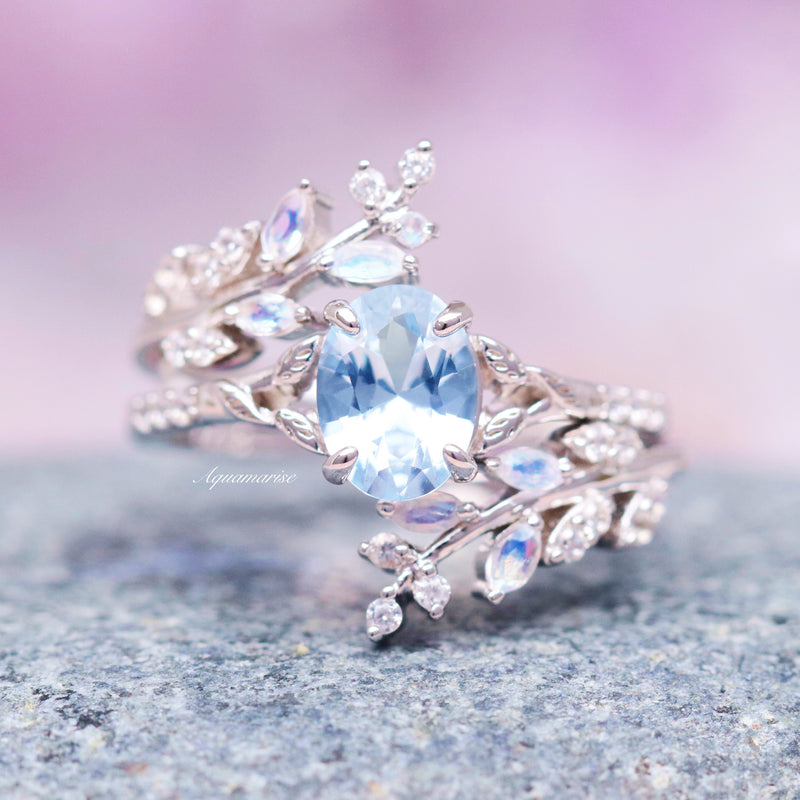
Setting style is the structural element of the ring — how the metal holds the stone.
Prong setting: Metal prongs grip the stone at multiple points. The most common engagement ring setting. Maximum light enters and exits the stone. Prongs can catch on fabric and require periodic tightening inspection.
Bezel setting: Metal rim fully encircles the stone. Maximum protection. Less light enters the stone laterally, reducing some fire. Very clean, modern appearance. Best for active wearers who want low-maintenance wear.
Tension setting: Stone held in place by the spring tension of the metal band, appearing to float between the two ends. Highly dramatic and modern. Requires precision engineering and should only be purchased from reputable brands; a poorly engineered tension setting can release the stone.
Cluster setting: Multiple stones in a group, often without a single dominant center stone. Used in Aquamarise’s Orion Nebula collection. Cluster settings can create the appearance of a much larger stone while using individual stones of modest size.
Cathedral setting: The shank of the ring rises on either side of the center stone, elevating it above the band. Adds height and visibility to the center stone. Common in traditional solitaires.
For Aquamarise designs, the setting style is often integral to the collection — the Skye Kite design uses a specific prong geometry that is part of the design, not interchangeable with other settings.
How to Choose Moissanite Ring Metal
Metal choice affects longevity, appearance, and cost. See the full breakdown:
Sterling silver: $300-$700 for complete Aquamarise rings. Best value entry point. Requires occasional polishing. Suitable for everyday wear with appropriate care.
Solid 14K gold: $900-$2,000. The recommended standard for engagement rings. Available in yellow, white, and rose gold. White gold requires rhodium re-plating every 1-3 years. Yellow and rose gold require no such maintenance.
Solid 18K gold: $1,400-$2,800. Higher purity (75% gold vs. 58.5%), slightly softer metal. More yellow than 14K. Preferred by buyers who want maximum gold content.
Platinum: $1,800-$3,500+. Most durable precious metal. Develops a patina over time rather than scratching through. Naturally white (no rhodium needed). The longest-wearing option for a ring that will be worn daily for decades.
Tungsten/titanium (men’s bands only): Alternative metals available for wedding bands. Tungsten is virtually scratch-proof but cannot be resized; titanium is lighter and workable but less dramatic in finish.
For engagement rings specifically, solid 14K or 18K gold is the appropriate choice for a ring intended for lifetime wear. Sterling silver is suitable for someone who wants to commit to the design and upgrade the metal later.
How to Choose Ring Size
Ring sizing is the most common source of post-purchase complications in online jewelry. Two approaches:
Measure at home: Use a strip of paper to measure around the finger, mark where the end meets the paper, and compare to a sizing chart. Measure in the evening (fingers are slightly larger later in the day) and at room temperature (fingers swell slightly in heat).
Existing ring: If you have a ring that fits the correct finger, bring it to any jewelry store for a free sizing.
For kite and cluster settings, which are typically designed without a standard circular cross-section, sizing up slightly is recommended — the angular geometry of the setting can make a ring feel tighter at the knuckle during removal even when the fit is otherwise correct.
Building a Complete Ring Set
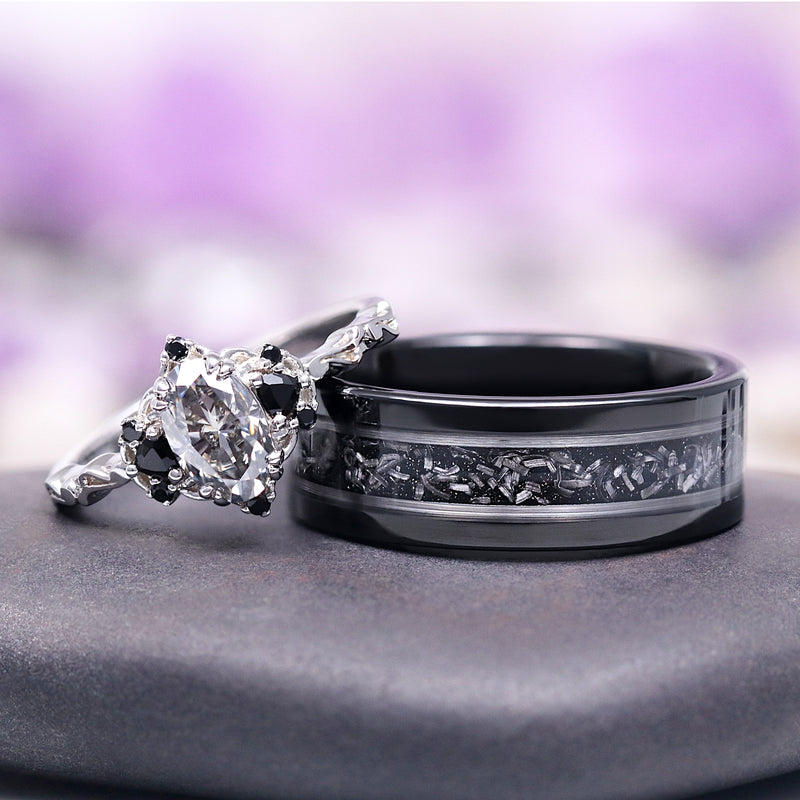
Many buyers purchase an engagement ring and a matching wedding band as a coordinated set rather than as separate decisions at different times.
Aquamarise designs their collections with coordinating band options. The Skye Kite engagement ring, for example, has a matching band designed to nest beside the angular kite setting without visual conflict. Purchasing both at the same time typically includes a discount versus buying separately, and ensures that the metals and finishes match exactly.
For couples rings (matching designs for both partners), Aquamarise’s couples ring collection offers coordinated designs across gender presentations — same design in different sizes and metal weights.
FAQ: How to Choose a Moissanite Engagement Ring
Q: Is moissanite a good substitute for diamond in an engagement ring?
Moissanite is not a substitute — it is a different stone with different properties. It has higher brilliance, more fire, and costs significantly less. For buyers who value sparkle and design impact over the cultural significance of diamond, moissanite is not a compromise; it is a better fit.
Q: How do you tell moissanite apart from diamond?
Under normal viewing conditions, VS-grade moissanite and a high-quality diamond are visually indistinguishable to the unaided eye. The tell is in direct sunlight or under a strong single light source: moissanite produces rainbow color flashes (fire) that diamond does not. To most observers, this reads as “very sparkly” rather than “not a diamond.”
Q: Does moissanite get cloudy over time?
No. Moissanite is not porous and does not absorb oils or residues. It can develop a film from lotion, soap, or fingerprints that dulls its appearance temporarily, but a quick wash removes this completely. Long-term cloudiness is not a known issue with moissanite.
Q: Can you insure a moissanite engagement ring?
Yes. Most jewelry insurance policies cover moissanite rings. The insured value is typically based on the ring’s replacement cost. Aquamarise’s custom rings can be appraised if needed for insurance documentation.
Q: What carat size looks best on an engagement ring?
For most hand sizes, a center stone between 1.0 and 2.0 carats (or equivalent) reads well as an engagement ring. The “right” size depends on hand size and finger width. Elongated cuts (oval, kite, marquise) appear larger per carat weight than round cuts of the same weight.
Timing Your Purchase
Fine jewelry orders from Aquamarise typically ship in 3-7 days for in-stock designs. Custom commissions require 2-5 weeks from order to shipment. International shipping adds 10-20 business days.
If your engagement is planned for a specific date, work backward:
– In-stock ring: Order 2-3 weeks before the planned date to allow for shipping and any size adjustments
– Custom ring: Order 8-10 weeks before the planned date
Current sale periods (such as the 4th of July sale with code AQUA15 for 15% off through July 5) can significantly reduce the total cost of an in-stock ring. Custom commissions often have separate discount structures.
Shop Aquamarise engagement rings here.
For a buyer’s guide to the best moissanite ring designs available in 2026, see our best moissanite engagement rings roundup. For a full brand review, see our Aquamarise review 2026.
Recommended for you
 Electric Wheelchair Cost, Insurance & Financing: What to Really Expect (2026)
 Foldable Electric Wheelchair Maintenance: Folding, Charging & Care (2026)
 How to Travel by Plane With an Electric Wheelchair (2026 Guide)
 Power Wheelchair vs Mobility Scooter: Which Is Right for You? (2026)
 Kerdom Wheelchair Comparison: DX04 vs DX07 vs DX08 (2026)
 Kerdom DX05 Review: The 400 lb All-Terrain Folding Power Chair (2026)