Beach Bunny Swimwear Review: Is the VIOLA Bikini Worth $108?
An honest Beach Bunny Swimwear review after wearing the VIOLA bikini: fit, fabric, print quality, and whether the $108 price tag delivers what it promises.

What Is Beach Bunny Swimwear?
- What Is Beach Bunny Swimwear?
- First Wear: Fit, Fabric, and What the Photos Don’t Show
- The Print Quality Test: Does It Survive a Full Season?
- The Elastic and Structure Test
- Beach Bunny Swimwear Review: Honest Complaints
- Who Is Beach Bunny Swimwear Right For?
- Comparing Beach Bunny to Competitors at Similar Price Points
- The Verdict
The VIOLA bikini top is a $108 triangle with a polka-dot print and adjustable ties. Described that way, it sounds like a test of whether brand name alone justifies a triple-digit price tag on swimwear. This Beach Bunny Swimwear review tries to answer that question honestly after a full season of wear — not just one photogenic afternoon at the beach.
The short version: the price is justified if you value longevity, print precision, and the specific construction quality that keeps a bikini looking new after 40 wears and dozens of repeated salt water rinses and chlorine pool rinses. It is not justified if you buy a new swimsuit every year and treat construction as irrelevant. This review gives you the information to decide which type of buyer you are.
What Is Beach Bunny Swimwear?
Beach Bunny Swimwear was founded in Newport Beach, California by Angela Chittenden. The brand’s identity combines California coastal culture with seasonal designer sensibility — collections are named and styled with the deliberateness of a fashion house rather than the trend-reactivity of fast swimwear. The 2026 line includes Italian Summer Edition, Island Crush, Coastal Crochet, Desert Daze, and Stateside Summer Club.
The brand sits between mass-market swimwear ($40-$80) and ultra-luxury resort wear ($200+). Its price points — tops $88-$138, bottoms $78-$98 — reflect a specific value proposition: designer-quality construction and print development without the exclusivity pricing of brands like Zimmermann or Agua Bendita.
The VIOLA specifically is a classic Beach Bunny triangle top — polka-dot printed, lined, with fully adjustable tie straps and a halter neck. It sits at $108, which in 2026 puts it in the same tier as the Emma Triangle ($108) and below the structured underwire styles like the Daisy ($128).
First Wear: Fit, Fabric, and What the Photos Don’t Show
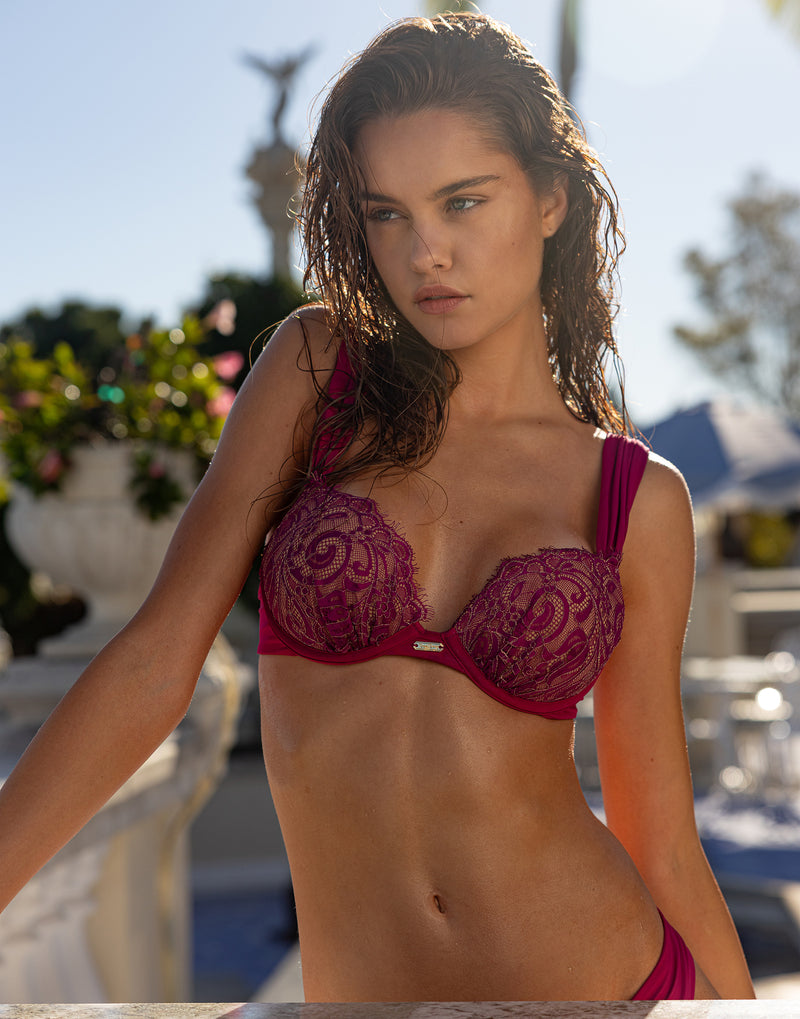
The first impression of Beach Bunny fabric is density. The VIOLA top uses a two-layer construction — an outer printed layer and an inner lining in a complementary solid — and the combined weight feels substantial compared to the single-layer fabric of budget swimwear at the same silhouette. This is the first visible sign that the construction cost is real.
The ties are fabric, not elastic-cored ribbon, which means they maintain their shape through knotting and do not gradually stretch out the way elastic-core ties do. The halter tie at the neck is long enough to adjust for both high-neck and low-neck styles depending on preference and activity level.
The fit across the bust is consistent with the sizing chart: a size medium provides coverage and support for a 34B-36C bust range without the pull or gape at the center that cheaper triangle tops produce when the fabric tension is not engineered correctly. The triangle panels sit flat and hold their position through movement.
What the photos do not show: the inside lining. On Beach Bunny tops, the inner fabric is smooth against the skin with no exposed seam allowances or rough edges. This sounds minor until you have worn a budget swimwear top for a full beach day and noticed the red marks from inner seams rubbing against the underside of the breast. The lining engineering matters.
The Print Quality Test: Does It Survive a Full Season?
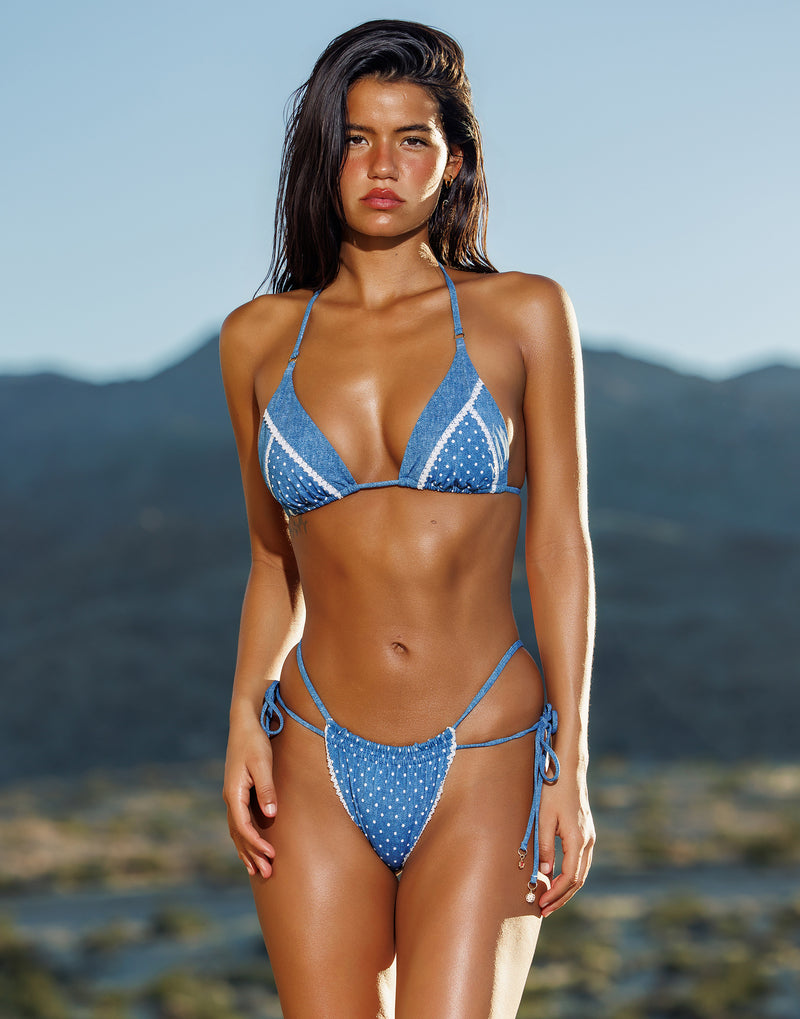
The VIOLA’s polka-dot print is a surface print on stretch nylon, not a woven-in pattern. This means it will eventually fade — the question is when. After a full summer season of regular beach and pool use, rinse-after-every-use care routine, and flat drying in shade, the print remains essentially unchanged from the first wear.
The color saturation of the dots has not faded perceptibly. The white ground has not yellowed or grayed (a common failure mode for white swimwear exposed to chlorine and sunscreen). The print edges are as crisp as they were in the first wear.
For comparison: a budget polka-dot bikini at $40 from a fast-fashion brand, given the same care routine, shows visible print fading after approximately six to eight weeks of summer use. The Beach Bunny version has not shown the same degradation at the comparable point.
The Elastic and Structure Test
The two failure modes for bikini tops over time are elastic breakdown (the waistband stretches out and does not recover) and wire or structural compromise (in underwire styles, the wire begins to poke through the casing).
The VIOLA is not an underwire style — it is a triangle with ties — so the structural integrity test is primarily about fabric recovery. After the first wash, the panels retain their shape. After ten washes, the same. The tie straps, which experience the most repeated tension through tying and untying, remain consistent in width and elasticity.
For underwire styles in the Beach Bunny line (the Daisy and Lena), the wire casing is the critical test. The wire casing on the Daisy uses a separate fabric tube sewn inside the cup rather than inserting wire into the seam allowance — a construction method that significantly extends the lifespan before wire breakout. This is the detail that separates a $40 underwire top from a $128 one.
Beach Bunny Swimwear Review: Honest Complaints
No review is useful without listing genuine limitations.
The sizing runs slightly small for the bust. Women between cup sizes consistently report that the triangle tops fit the smaller size in the waistband and the larger size in the cup. The brand’s advice is to size to the cup and adjust the ties. This works, but the adjustability only goes so far — for significantly different waist and cup measurements, the triangle format has inherent limits.
The straps can mark the shoulders on fair skin after a full day in direct sun. This is a characteristic of any tie-neck swimwear with fabric ties, not a Beach Bunny-specific issue. Rotating between styles on a multi-day beach trip prevents it.
The price point requires a commitment. At $108 for a top, a full Beach Bunny set runs $186-$236. This is not an impulse purchase, and there is no point pretending otherwise. The brand’s sale section — currently active — brings tops down to the $91-$98 range, which changes the value calculation meaningfully for shoppers willing to be flexible on specific styles.
The affiliate program terms mean Beach Bunny links go directly to the site without additional discount codes. There is no stackable coupon code at time of writing.
Who Is Beach Bunny Swimwear Right For?
This Beach Bunny Swimwear review reaches the same conclusion a full-season wear test supports: Beach Bunny is right for women who want swimwear that looks as good at the end of a summer as it did at the beginning, who will wear a piece 20-30 times rather than 3-4 times, and who respond to design identity — the Italian Summer Edition feels different from the Desert Daze line in the same way that fashion collections from a real designer feel different from each other.
It is not the right choice for: women who buy new swimwear every season regardless of condition, women for whom a $108 bikini top requires genuine financial sacrifice rather than considered spending, or women who prefer minimalist aesthetics (the brand leans heavily into print and visual impact).
Comparing Beach Bunny to Competitors at Similar Price Points
At $88-$138 for tops, Beach Bunny competes with L*Space ($85-$120), Frankies Bikinis ($95-$125), and the lower end of Zimmermann swimwear ($150+).
Against L*Space: Beach Bunny wins on print distinctiveness and underwire construction quality. LSpace has a slightly more minimalist aesthetic and stronger brand recognition in resort contexts. If you prefer clean color blocks over printed styles, LSpace is the stronger choice.
Against Frankies Bikinis: Frankies has a stronger social media presence and a younger, more trend-forward aesthetic identity. Beach Bunny’s construction quality is comparable but its design language is more enduring — the Italian Summer Edition will not feel dated in three years the way a heavily trend-specific Frankies season can.
Against Zimmermann: Zimmermann starts where Beach Bunny ends and goes significantly higher. The construction quality edge Zimmermann holds is real but incremental. For most women, the gap does not justify 40-60% higher prices.
The Beach Bunny sweet spot is the buyer who wants designer construction and print quality at a price that is accessible with considered spending rather than requiring a formal budget category.
The Verdict
The VIOLA bikini top at $108 is worth the price for the buyer described above. The construction quality, print durability, and fabric engineering deliver a measurable difference from mid-market swimwear that shows up most clearly after the first season rather than on the first wear.
Shop Beach Bunny Swimwear here.
For the broader landscape of luxury swimwear picks, see our best luxury bikinis guide. For fit guidance before you buy, read our bikini buying guide.
Recommended for you
 Electric Wheelchair Cost, Insurance & Financing: What to Really Expect (2026)
 Foldable Electric Wheelchair Maintenance: Folding, Charging & Care (2026)
 How to Travel by Plane With an Electric Wheelchair (2026 Guide)
 Power Wheelchair vs Mobility Scooter: Which Is Right for You? (2026)
 Kerdom Wheelchair Comparison: DX04 vs DX07 vs DX08 (2026)
 Kerdom DX05 Review: The 400 lb All-Terrain Folding Power Chair (2026)